Homemade Butterscotch Pudding with a Rich Caramel-Like Flavor
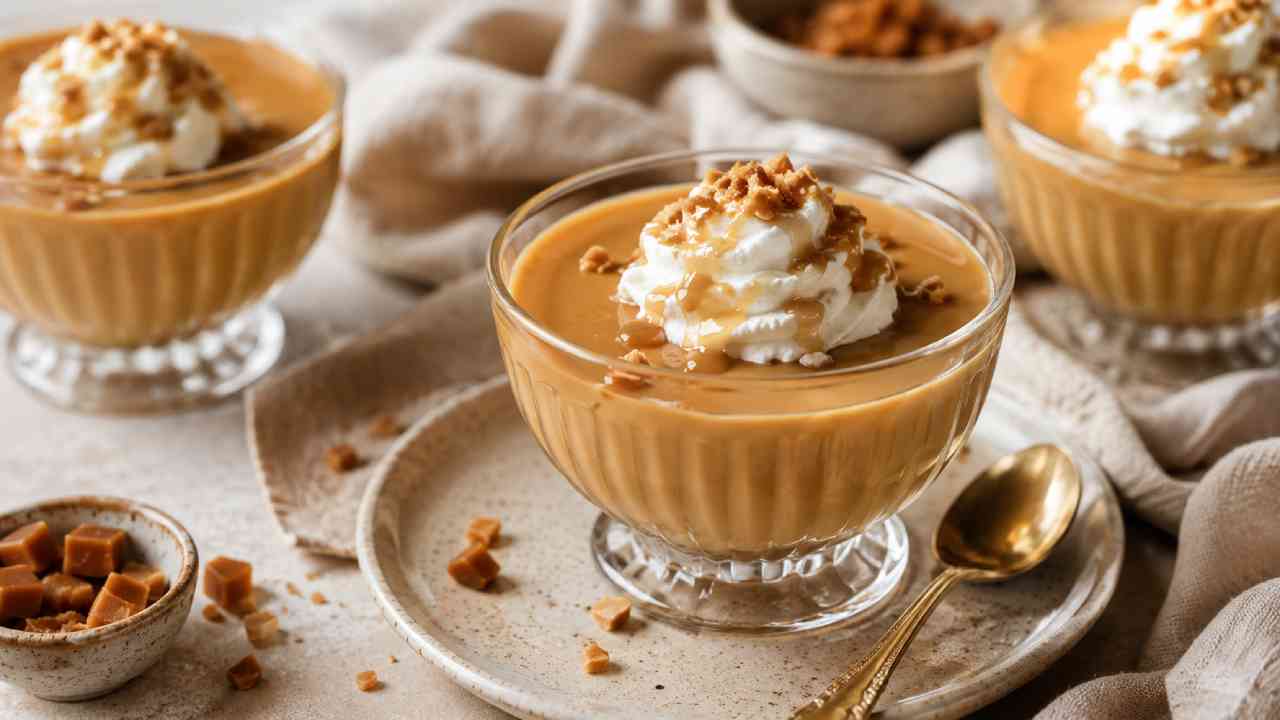
TastyPlatePedia – There is something comforting about a dessert made from simple pantry ingredients. Butterscotch Pudding captures that feeling with its silky texture, buttery aroma, and deep brown sugar sweetness. Unlike ordinary caramel pudding, this dessert develops its signature flavor from butter and brown sugar. As a result, every spoonful tastes warm, creamy, and pleasantly rich. Better still, the homemade version requires no complicated equipment. A saucepan, whisk, and a little patience are usually enough. The recipe also offers plenty of room for personal touches, from a pinch of sea salt to fresh whipped cream. Therefore, it works equally well as an easy family dessert or an elegant treat for guests.
Read Also: Asian Tempura Udon Combines Chewy Noodles With Golden Tempura
What Makes Butterscotch Pudding So Special?
Butterscotch Pudding stands apart because it turns familiar ingredients into something surprisingly luxurious. Brown sugar provides a deeper sweetness than regular white sugar because it contains molasses. Meanwhile, butter adds richness and creates the signature butterscotch character. Milk and cream soften those stronger flavors while giving the pudding its smooth body. In addition, vanilla adds a gentle aromatic note without overpowering the brown sugar. The result sits somewhere between a classic custard and a soft pudding. It feels rich but remains light enough to enjoy after dinner. Most importantly, homemade pudding allows you to control its sweetness and texture. That flexibility makes the recipe especially useful for home cooks who prefer desserts that taste balanced rather than overwhelmingly sugary.
Butterscotch and Caramel Are Not Exactly the Same
Although butterscotch and caramel share similar golden-brown flavors, they are not identical. Traditional caramel begins with white granulated sugar, which is heated until it melts and develops toasted notes. Butterscotch, on the other hand, traditionally combines brown sugar with butter. Consequently, it tends to taste softer, richer, and more buttery. Brown sugar also brings subtle molasses notes that ordinary caramel does not naturally have. However, the finished pudding can still remind people of caramel because both flavors rely on cooked sugar characteristics. That is why “caramel-like” describes the experience well without treating the two as the same thing. Understanding this difference also helps when cooking. Instead of pushing the sugar toward a dark caramel stage, the goal is to develop the brown sugar and butter gently while preserving their warm, rounded flavor.
Ingredients for Homemade Butterscotch Pudding
A good Butterscotch Pudding does not need a long ingredient list. Instead, quality and balance matter more. Whole milk creates the creamy foundation, while heavy cream adds extra richness. Brown sugar supplies the signature sweetness, and unsalted butter gives the dessert its unmistakable buttery finish. Cornstarch helps thicken the mixture without making it heavy. Meanwhile, egg yolks contribute richness and create a custard-like mouthfeel. Vanilla and salt may seem minor, yet both make a noticeable difference. Vanilla rounds out the aroma, whereas salt prevents the sweetness from becoming flat. For approximately four to six servings, prepare:
● 2 cups whole milk
● ½ cup heavy cream
● ¾ cup packed dark brown sugar
● 3 tablespoons unsalted butter
● 3 tablespoons cornstarch
● 3 large egg yolks
● 1 teaspoon pure vanilla extract
● ¼ teaspoon fine sea salt
● Whipped cream for serving, optional
● Toasted pecans or walnuts, optional
How to Make Butterscotch Pudding Step by Step
Making homemade pudding is straightforward, but temperature control matters. Therefore, prepare and measure everything before turning on the stove. This prevents the sugar mixture from cooking while you search for another ingredient. Keep the heat moderate and whisk frequently. Most importantly, avoid rushing the thickening stage because excessive heat can affect the final texture.
- Add the brown sugar and butter to a medium saucepan. Cook over medium-low heat until the butter melts and the mixture becomes glossy.
- In a separate bowl, whisk the milk, heavy cream, cornstarch, egg yolks, and salt until smooth.
- Slowly pour part of the warm brown sugar mixture into the milk mixture while whisking continuously.
- Gradually return everything to the saucepan. Continue whisking over medium-low heat.
- Cook until the pudding thickens enough to coat the back of a spoon.
- Remove the saucepan from the heat. Then, stir in the vanilla extract.
- For an especially silky finish, pour the pudding through a fine-mesh strainer.
- Divide it among serving glasses or small bowls.
- Cover the surface and refrigerate for at least two to three hours before serving.
The Secret to a Silky and Creamy Texture
Texture can transform an ordinary pudding into a memorable dessert. Fortunately, several small techniques make a significant difference. First, dissolve the cornstarch completely before heating the mixture. Any dry pockets can create unpleasant lumps later. Next, temper the eggs by introducing warm liquid gradually rather than exposing the yolks to sudden heat. This step lowers the risk of scrambled egg pieces appearing in the pudding. Moreover, steady whisking helps distribute heat evenly. Once the mixture has thickened, avoid cooking it much longer than necessary. Excessive heat can make the pudding overly firm after refrigeration. Finally, straining is worth the extra minute. Even a well-made custard can contain tiny cooked particles, and a fine-mesh strainer removes them. The finished Butterscotch Pudding should feel smooth, spoonable, and creamy rather than rubbery or gelatinous.
Why Dark Brown Sugar Creates a Deeper Flavor
Brown sugar plays a bigger role here than simply making the dessert sweet. Dark brown sugar contains more molasses than light brown sugar, which gives the pudding a stronger toasted and slightly earthy character. For that reason, it works particularly well when you want a pronounced butterscotch profile. Light brown sugar is still a good alternative. In fact, some people may prefer it because the resulting flavor is gentler. However, replacing brown sugar entirely with white sugar changes the personality of the dessert. You lose much of the molasses depth that distinguishes butterscotch from standard caramel flavors. From a home cook’s perspective, this is one of those recipes where a small ingredient choice creates a noticeable difference. Therefore, choose the sugar according to the flavor you want rather than simply using whichever sweetener happens to be available.
Easy Toppings That Make It Even Better
A chilled bowl of Butterscotch Pudding needs very little decoration. Nevertheless, thoughtful toppings can introduce useful contrasts in texture and flavor. Fresh whipped cream is perhaps the easiest choice because its airy texture balances the dense custard. Toasted pecans or walnuts provide crunch and a slightly savory nuttiness. Meanwhile, a tiny sprinkle of flaky sea salt makes the brown sugar notes seem more pronounced. Banana slices also work beautifully because their mellow sweetness complements butterscotch without competing with it. For a more indulgent presentation, add a thin drizzle of homemade butterscotch sauce. Crushed shortbread cookies are another simple option. They add buttery crunch while keeping the overall flavor cohesive. However, avoid piling on too many toppings at once. The pudding should remain the star, while every garnish should provide contrast rather than cover its delicate flavor.
Read Also: Medovik Cake Charms with Thin Honey Layers and Silky Cream
Common Mistakes to Avoid When Making Pudding
The most common pudding problems usually come from heat rather than ingredients. High temperatures may thicken the mixture quickly, but they also increase the chance of scorching the milk or overcooking the eggs. Therefore, medium-low heat is generally safer. Another mistake is stopping the whisk too often. The bottom of the saucepan receives direct heat, so regular stirring prevents cooked patches from forming. Likewise, do not add eggs directly to a very hot mixture. Temper them slowly instead. Measuring cornstarch carefully is equally important. Too little can leave the dessert runny, while too much produces a stiff texture. Finally, remember that pudding continues to set as it cools. It does not need to become extremely thick on the stove. Aim for a creamy consistency that coats a spoon, then allow refrigeration to finish the process.
Practical Tips for Better Homemade Butterscotch Pudding
Small adjustments can make each batch more consistent. These tips are especially useful if you are preparing the dessert for guests or making it ahead of time.
- Use whole milk instead of low-fat milk for a fuller, smoother texture.
- Measure brown sugar after packing it gently into the measuring cup.
- Keep the heat moderate so the dairy does not scorch.
- Whisk continuously once the pudding begins to thicken.
- Use a fine-mesh strainer if you want a restaurant-style silky finish.
- Press plastic wrap directly against the surface if you want to prevent a skin from forming.
- Chill the pudding thoroughly because its texture improves as it sets.
- Add toppings shortly before serving so nuts and cookies remain crisp.
- Taste before adding extra salt, especially if you use salted butter.
- Serve it slightly chilled rather than frozen to preserve its creamy texture.
A Simple Dessert Worth Making From Scratch
Homemade Butterscotch Pudding shows why classic desserts continue to deserve a place in modern kitchens. It does not depend on elaborate decoration or unusual ingredients. Instead, its appeal comes from the transformation of brown sugar, butter, dairy, and vanilla into a smooth dessert with remarkable depth. Furthermore, the recipe is flexible enough for both casual and elegant occasions. Serve it in simple bowls for a family dinner or portion it into small glasses for a more polished presentation. Either way, the contrast between silky custard and rich butterscotch flavor creates the memorable part. For anyone accustomed to instant pudding mixes, making it from scratch can also reveal how much difference fresh ingredients and careful temperature control make. Sometimes, a familiar dessert becomes more interesting when simplicity is handled well.