Healthy Tempeh Buddha Bowl with Colorful Vegetables
TastyPlatePedia – A Tempeh Buddha Bowl brings together crispy tempeh, colorful vegetables, wholesome grains, and a creamy dressing in one satisfying meal. Instead of relying on complicated ingredients, this bowl turns everyday foods into something fresh and inviting. Tempeh provides a hearty centerpiece, while vegetables add contrasting textures and colors. Meanwhile, brown rice or quinoa creates a filling base that works well for lunch or dinner. What makes this dish especially useful is its flexibility. You can adjust the vegetables according to the season, use leftover grains, or change the dressing without losing the basic character of the meal. In my view, that practicality is one reason Buddha bowls remain appealing beyond food trends. They encourage variety while keeping preparation manageable. With thoughtful portions and a flavorful homemade dressing, this colorful bowl can become an easy addition to a balanced weekly menu.
Read Also: Creamy Homemade Mac and Cheese with Rich Cheesy Sauce
Why a Tempeh Buddha Bowl Works So Well
A good Tempeh Buddha Bowl is more than several healthy ingredients arranged in a pretty bowl. Each component has a purpose. Tempeh adds a firm, nutty bite, while fresh vegetables bring crunch and brightness. Brown rice, quinoa, or another whole grain gives the meal more substance. In addition, avocado, seeds, or a light tahini dressing can provide richness without overwhelming the other flavors. The contrast makes every spoonful slightly different. That matters because nutritious meals are easier to enjoy regularly when they also offer satisfying textures and flavors. Furthermore, the bowl format makes portions easy to see and adjust. Rather than following rigid rules, home cooks can create a combination that fits their appetite and available ingredients. As a result, this meal feels practical, colorful, and genuinely enjoyable.
Choosing Tempeh for the Best Flavor and Texture
Tempeh deserves careful preparation because it becomes the main savory element of the bowl. Fresh tempeh should have a firm texture and a clean, pleasantly nutty aroma. Before cooking, cut it into cubes, strips, or thin triangles so the seasoning can cover more surface area. Next, marinate it with garlic, low-sodium soy sauce, lime juice, ginger, and a small amount of sesame oil. Even 15 to 20 minutes can add noticeable flavor. Afterward, bake, air-fry, or pan-sear the pieces until their edges become golden and slightly crisp. Personally, I prefer baking when preparing several portions because it requires less attention and produces consistent results. However, pan-searing works well when time is limited. Most importantly, avoid drowning the tempeh in sauce. A balanced marinade should enhance its natural character rather than hide it.
Colorful Vegetables Make the Bowl More Interesting
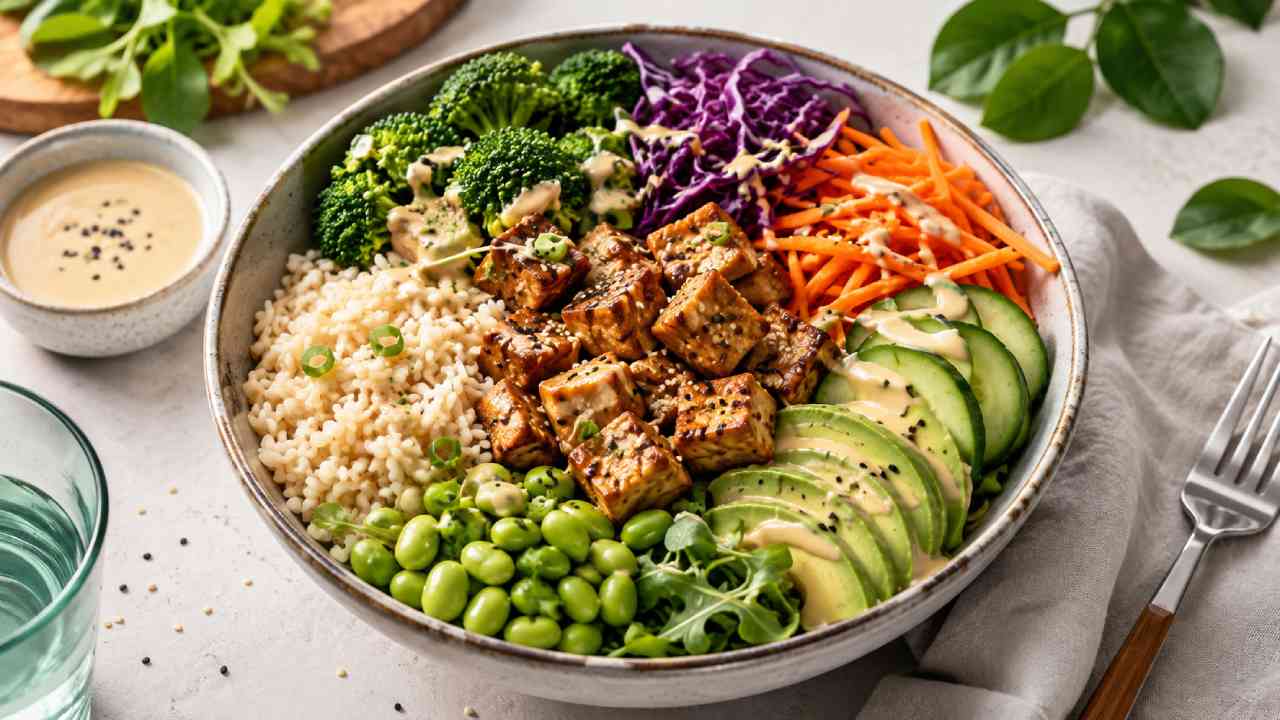
Color is not only decorative in a Tempeh Buddha Bowl. It also encourages ingredient variety. For example, shredded purple cabbage provides crunch, carrots add mild sweetness, and broccoli contributes a tender bite when lightly roasted or steamed. Meanwhile, cucumber brings freshness that balances warm tempeh and grains. Red bell pepper, spinach, edamame, tomatoes, or radishes can also work beautifully. Instead of adding every vegetable available, choose three to five with different textures. This approach keeps the bowl interesting without making it unnecessarily complicated. Seasonal produce is another smart choice because it can offer better flavor and value. During warmer months, cucumber and tomatoes feel refreshing. In cooler weather, roasted pumpkin, cauliflower, or sweet potato can make the meal more comforting. Therefore, the same basic recipe can change throughout the year while remaining familiar.
Build a Wholesome and Satisfying Grain Base
The grain layer gives the bowl structure and helps turn vegetables and tempeh into a complete meal. Brown rice is an accessible option with a mild flavor that pairs naturally with savory tempeh. Alternatively, quinoa has a lighter texture and works particularly well with lemon or tahini-based dressings. Barley, farro, or mixed grains can provide even more variation. For convenient meal preparation, cook the grain ahead and refrigerate it in a sealed container. Then, reheat the portion you need before assembling the bowl. Another option is to combine grains with leafy greens when you want something lighter. For instance, half brown rice and half spinach creates a fresh base without removing the satisfying grain component entirely. Ultimately, there is no single perfect choice. The best base is one that complements the toppings and makes the Tempeh Buddha Bowl enjoyable enough to prepare again.
A Simple Dressing Can Transform Every Bite
Dressing connects the separate ingredients and gives the bowl its final personality. A simple tahini dressing can be made with tahini, fresh lemon juice, garlic, water, and a small pinch of salt. Gradually adding water creates a smooth consistency that drizzles easily over vegetables and tempeh. Alternatively, a peanut dressing made with natural peanut butter, lime juice, ginger, and a little soy sauce creates a richer Asian-inspired flavor. However, moderation matters because dressing can quickly dominate a carefully assembled bowl. Start with a small amount, toss lightly, and add more only when needed. Fresh herbs can also provide extra flavor without requiring a heavier sauce. Cilantro, mint, parsley, or sliced spring onions all work well. Consequently, even a familiar combination of tempeh and vegetables can taste different simply by changing the dressing and herbs.
How to Assemble a Tempeh Buddha Bowl
Assembly becomes easier when every ingredient is prepared before it enters the bowl. First, place cooked brown rice or quinoa across one section of a wide bowl. Next, arrange the crispy tempeh beside the grain instead of immediately mixing everything together. Add broccoli, shredded cabbage, carrots, cucumber, and any other prepared vegetables in separate sections. Then, include avocado or edamame for additional texture. A sprinkle of sesame seeds, pumpkin seeds, or chopped herbs can provide a simple finishing touch. Finally, drizzle the dressing across the top just before serving. This arrangement is visually attractive, but it also has a practical benefit. Each ingredient keeps its texture until the meal is mixed. In my experience, placing crunchy and creamy ingredients separately makes the first few bites especially enjoyable. Once assembled, gently combine the components so the dressing reaches the grain, vegetables, and tempeh evenly.
Read Also: Butter Swim Biscuits Recipe: Super-Soft Buttery Bread with Golden Edges
Make It Practical for Weekly Meal Prep
A Tempeh Buddha Bowl adapts particularly well to meal prep because most components can be prepared separately. At the beginning of the week, cook a batch of grains, roast several vegetables, and prepare the tempeh. Store each component in an appropriate sealed container rather than assembling every bowl immediately. Fresh cucumber, leafy greens, avocado, and dressing are generally better added closer to serving time. This helps preserve their texture and keeps the meal from becoming soggy. Moreover, preparing ingredients separately allows you to create different combinations during the week. One day, pair tempeh with brown rice and broccoli. On another day, use quinoa, cabbage, carrots, and a peanut dressing. This small change can prevent meal-prep fatigue. For food safety, refrigerate cooked ingredients promptly and follow appropriate storage guidance for each ingredient. When freshness is uncertain, preparing a new batch is the safer choice.
Easy Ways to Customize the Recipe
One strength of this recipe is that substitutions rarely ruin the overall concept. If broccoli is unavailable, try green beans, zucchini, cauliflower, or bok choy. Sweet potato can replace part of the grain when you want a softer, naturally sweet component. Likewise, avocado can be exchanged for seeds or a modest amount of nut-based dressing. Spice lovers might add chili flakes, sambal, or fresh sliced chili. For a brighter flavor, lime juice and fresh herbs make an immediate difference. You can also change the tempeh marinade. A mixture of ginger, garlic, and soy sauce creates a savory profile, whereas smoked paprika and lemon produce a completely different result. Because the formula remains simple—tempeh, vegetables, a wholesome base, and dressing—the possibilities are extensive. Therefore, customization feels intentional rather than like compromising the original recipe.
Balanced Flavor Is Better Than Following Food Trends
Healthy eating does not need to mean bland meals or complicated rules. A thoughtfully prepared Tempeh Buddha Bowl demonstrates how familiar ingredients can become a satisfying meal through contrast, seasoning, and careful preparation. Crispy tempeh works against tender grains, while fresh vegetables add crunch and acidity. At the same time, a measured amount of dressing brings everything together. The bowl can also introduce people to tempeh in a format that feels approachable and modern. Still, no single recipe determines whether an overall diet is healthy. Variety, portions, ingredient choices, and individual nutritional needs remain important. That broader perspective makes more sense than treating one fashionable dish as a shortcut to perfect nutrition. Instead, consider this bowl a flexible framework for eating more vegetables, enjoying plant-based protein, and making home cooking easier. Most importantly, it should taste good enough that you genuinely want to make it again.