Brazilian-Italian Flavors Collide at New Los Angeles Restaurant Briciola
TastyPlatePedia – Los Angeles has welcomed another distinctive dining concept with the arrival of Briciola in Silver Lake. The intimate restaurant brings Brazilian-Italian flavors together along Sunset Boulevard. Rather than treating fusion as a simple culinary experiment, Briciola connects two food cultures through personal heritage. The restaurant opened in mid-September 2026 in the former Spoon & Pork space. Its name, Briciola, means “crumb” in Italian, which also reflects the restaurant’s small and intimate setting. Behind the concept are chef Matteo Di Nicola and Mattia Raimond. Together, they previously operated Cedro, an Italian restaurant in Newbury Park that received Michelin recognition. Now, their latest project explores a broader culinary identity. Italian techniques remain an important foundation. However, Brazilian ingredients and memories bring unexpected character to familiar dishes. As a result, Briciola arrives with a concept that feels personal rather than manufactured.
Read Also: Castella Cream Salt Bread Goes Viral, Bringing Softness and Savory Flavor Together
Briciola Grows From Two Distinct Culinary Backgrounds
The story behind Briciola helps explain why its Brazilian-Italian identity feels natural. Mattia Raimond was born in Belo Horizonte, Brazil, and later grew up in Northern Italy. His mother comes from Rio de Janeiro, while his father operated an Italian restaurant in Brazil. Meanwhile, chef Matteo Di Nicola was born in Rome and grew up around professional kitchens. His family operated restaurants in Italy, and he later pursued culinary training himself. Therefore, Briciola brings together more than two national cuisines. It reflects the backgrounds of the people creating the food. Raimond has described Italian-Brazilian fusion as a concept he had long wanted to develop. Their move into Los Angeles provided an opportunity to explore that idea more fully. Moreover, California’s diverse dining culture gives the team room to introduce dishes that cross traditional boundaries while still respecting their origins.
The Menu Moves Beyond Familiar Brazilian Steakhouse Ideas
Brazilian cuisine in the United States is often associated with churrascaria-style restaurants and grilled meats. However, Briciola takes a different path. The restaurant highlights regional ingredients and dishes while keeping much of its menu visually rooted in Italian dining. That approach becomes clear from the starters. Prosciutto crudo, for example, is paired with sweet papaya. Polenta frita reflects the influence of Italian migration to Brazil. Meanwhile, bolinho de bacalhau brings cod and potato together with roasted red pepper sauce. These combinations allow the restaurant to introduce Brazilian flavors without abandoning its Italian foundation. More importantly, the menu does not rely on a single fusion formula. Some dishes connect through ingredients, while others reference migration and culinary history. This gives the menu more depth. Instead of simply placing Brazilian ingredients on Italian dishes, Briciola uses shared cultural connections to shape the dining experience.
Cachaça Cavatappi Gives Pasta a Brazilian Personality
One of Briciola’s most intriguing dishes is its cavatappi. The spiral-shaped pasta arrives with linguiça calabresa and a creamy pink sauce. However, one ingredient changes the familiar formula: cachaça. Traditionally produced from fermented sugarcane juice, cachaça is strongly associated with Brazil. At Briciola, it takes the place commonly occupied by vodka in a pink pasta sauce. The change may sound small, yet it captures the restaurant’s broader philosophy. Diners still recognize the structure of an Italian pasta dish. At the same time, a Brazilian ingredient gives it another layer of identity. Linguiça calabresa adds further Brazilian character and a contrasting texture. Consequently, the dish offers a clear example of fusion cooking that remains understandable. It does not abandon pasta tradition. Instead, it changes selected elements to create something connected to both culinary worlds.
Moqueca-Inspired Branzino Connects Italy With Brazil
Seafood provides another bridge between the two cuisines. Briciola serves grilled branzino with a sauce inspired by moqueca, the Brazilian seafood dish closely associated with regions including Bahia. At Briciola, coconut and bell pepper help shape the sauce surrounding the fish. The result connects a familiar Mediterranean fish with flavors that point toward Brazil. This approach is important because it shows how fusion can work through technique and context rather than novelty alone. Branzino already fits naturally within Italian and Mediterranean dining. Meanwhile, the moqueca inspiration changes its aromatic profile. Therefore, diners encounter something recognizable before discovering another culinary influence. In my view, this kind of combination is often more convincing than fusion created only for visual impact. Each component has a clear purpose. The fish remains central, while the sauce introduces the Brazilian side of Briciola’s identity.
Familiar Italian Dishes Receive Unexpected Brazilian Details
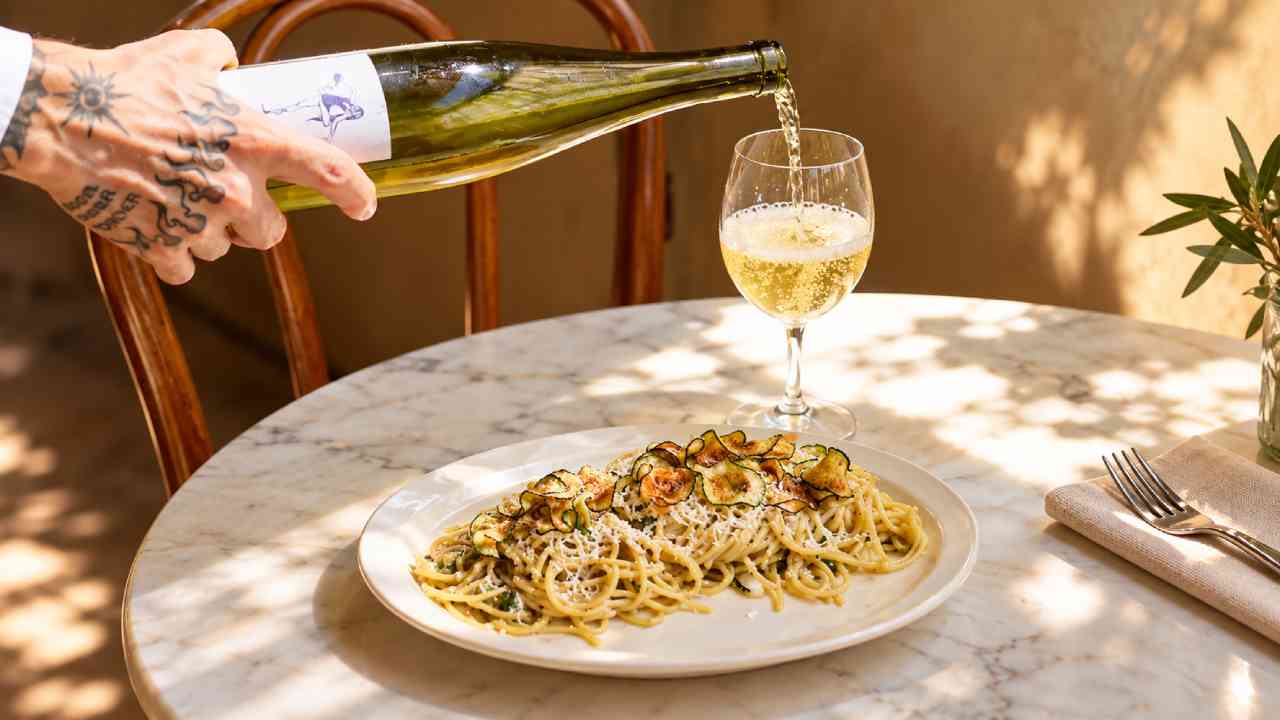
The experimentation continues across other parts of the menu. Briciola’s Caprese carioca combines burrata and cherry tomatoes with roasted pineapple, sunflower seeds, and micro basil. Another salad, called Cesarinha, adds crunchy plantains alongside Parmesan. Meanwhile, spaghetti alla Nerano replaces the usual cheese direction with queijo Minas, a soft Brazilian cheese from Minas Gerais. These choices illustrate how the restaurant approaches Brazilian-Italian cooking. Rather than rebuilding every classic dish from the ground up, the kitchen often changes one or two important components. Consequently, diners can recognize the original inspiration while tasting something different. This balance can be especially valuable for fusion restaurants. Too many competing ingredients may make a dish feel confusing. In contrast, carefully chosen substitutions can create a clearer identity. Briciola appears to use that strategy across several dishes, giving Brazilian ingredients enough space to stand out without completely hiding the Italian framework.
Desserts Continue the Cross-Cultural Story
Briciola’s cultural crossover does not stop when the savory courses end. Dessert continues the conversation between Italy and Brazil. Options reported at the restaurant include amarena gelato as well as queijo Minas served with goiabada, a guava-based sweet. Another unusual combination comes through banana Foster finished with salty pecorino cheese. These desserts reinforce the idea that Briciola is not built around one signature fusion dish. Instead, the Brazilian-Italian concept runs throughout the meal. Sweet, salty, creamy, and fruity elements appear in combinations that may feel unfamiliar at first. However, they remain connected to recognizable ingredients from both culinary traditions. This creates an interesting ending to the dining experience. Dessert becomes another opportunity to explore cultural overlap rather than simply providing something sweet after dinner. For adventurous diners, these combinations may become some of the restaurant’s most memorable offerings.
Read Also: Healthy Chicken Eggplant Bake, a High-Protein Dinner Made Simple
Natural Wines Add Another Layer to Briciola’s Experience
Food remains the main attraction, but wine also plays a role in Briciola’s identity. The restaurant currently emphasizes natural wines from European producers, including bottles from countries such as Austria, Germany, and France. At the same time, the team has been working toward bringing Brazilian wines into the selection. That direction could strengthen the restaurant’s cross-cultural concept even further. Wine pairing can change how diners experience rich pasta, seafood, cheese, and fruit-driven dishes. Therefore, expanding the list with Brazilian bottles would create another connection between the menu’s two cultural influences. Raimond’s background as a trained sommelier also adds useful context to this part of the restaurant. Rather than treating wine as an afterthought, Briciola has an opportunity to use the beverage program as an extension of its story. The result could make the dining concept feel more complete.
Silver Lake Gives the Concept Room to Stand Out
Location matters for a restaurant built around cultural experimentation. Briciola sits at 3131 West Sunset Boulevard in Silver Lake, an area with an active and varied dining scene. The restaurant has already joined Eater Los Angeles’ October 2026 selection of notable new restaurants in the city. That recognition gives Briciola additional visibility during its early months. However, the neighborhood connection may be equally important over time. Raimond said the restaurant had already begun attracting regular customers soon after opening. That early local response suggests diners are engaging with more than the novelty of a Brazilian-Italian label. For a small restaurant, regular guests can become especially important. They create consistency after the excitement surrounding an opening begins to fade. Therefore, Briciola’s long-term story may depend on whether its distinctive menu can turn curious first-time visitors into returning neighborhood diners.
Brazilian-Italian Fusion Reflects a More Personal Kind of Dining
Briciola arrives at an interesting moment for restaurant culture. Diners increasingly encounter menus shaped by migration, family history, travel, and mixed cultural backgrounds. In that context, Brazilian-Italian cooking does not need to fit neatly into one traditional category. Briciola demonstrates how personal history can become part of a restaurant’s culinary language. Its cachaça pasta, moqueca-inspired branzino, plantain-topped salad, and Brazilian cheese combinations each tell a small part of that story. However, the strongest element may be the reasoning behind those combinations. The founders have genuine connections to the cuisines represented on the menu. That gives the concept a sense of continuity rather than randomness. As Los Angeles continues to welcome restaurants with increasingly diverse influences, Briciola offers another example of how heritage can inspire modern dining. Here, Brazil and Italy do not compete for attention. Instead, they meet on the same plate.