Victoria Sponge Cake Remains an Iconic Classic British
TastyPlatePedia – Few desserts have remained as timeless as the Victoria Sponge Cake. While food trends continue to evolve, this traditional British cake has preserved its popularity through simplicity, elegance, and balanced flavor. Made with two light sponge layers filled with fruit jam and fresh cream or buttercream, it represents a style of baking that values quality ingredients over elaborate decoration. Today, the cake is enjoyed not only in the United Kingdom but also by baking enthusiasts around the world. Its enduring appeal proves that classic recipes can remain relevant, even in an era dominated by creative and visually extravagant desserts.
Read Also: Pasta Primavera Meals That Celebrate Fresh Vegetables and Classic Italian Cooking
The Story Behind Victoria Sponge Cake
The Victoria Sponge Cake takes its name from Queen Victoria, who ruled the United Kingdom during the nineteenth century. Historical accounts suggest that the Queen enjoyed a slice of sponge cake alongside her afternoon tea, helping the dessert gain widespread popularity. As afternoon tea became an important social tradition, this elegant cake naturally became one of its signature treats. Over time, bakers across Britain embraced the recipe, preserving its original charm while introducing small regional variations. Today, Victoria Sponge Cake is still considered one of the country’s most recognizable traditional bakes.
What Makes Victoria Sponge Cake Unique
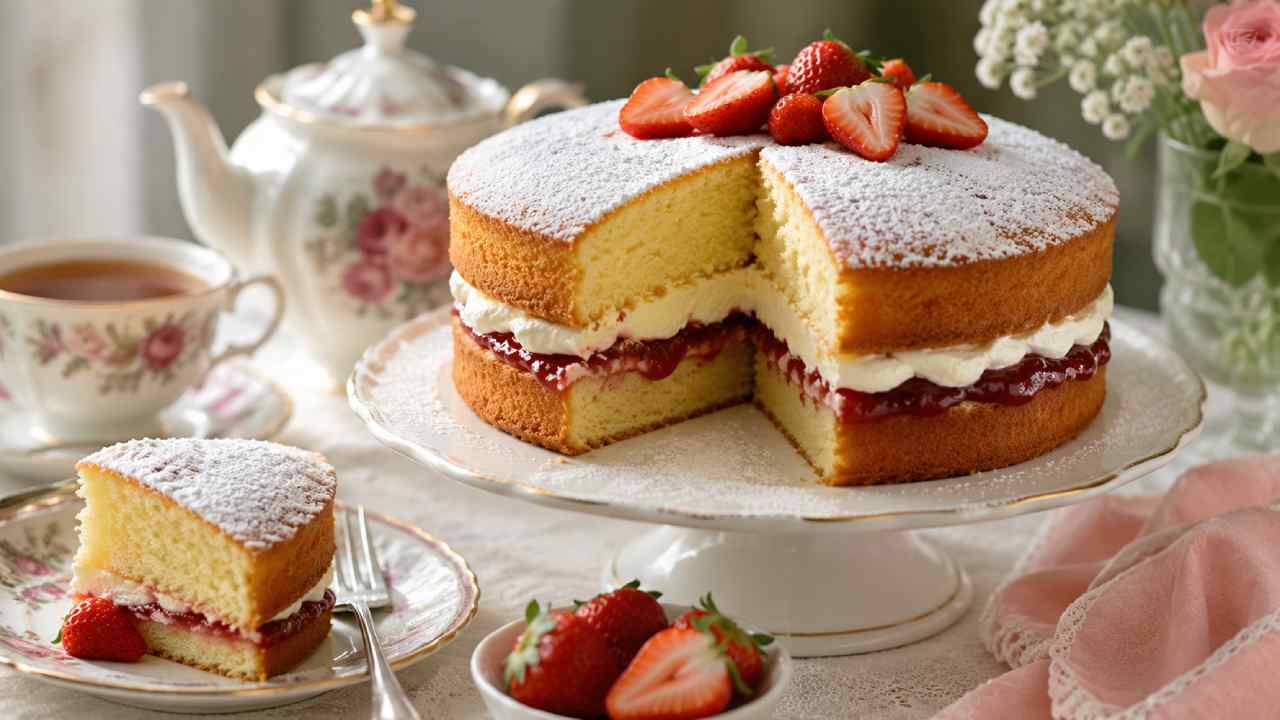
Unlike heavily decorated celebration cakes, Victoria Sponge Cake focuses on balance and simplicity. It usually consists of two evenly baked sponge layers filled with strawberry or raspberry jam and either whipped cream or buttercream. Finally, a light dusting of powdered sugar completes the presentation. There is no thick fondant or elaborate frosting because the cake celebrates delicate texture rather than visual excess. This understated style allows the natural flavors of butter, eggs, and fruit to shine. Consequently, every bite feels light, soft, and pleasantly satisfying without becoming overly sweet.
The Secret Behind Its Light and Fluffy Texture
One reason the Victoria Sponge Cake has remained popular is its remarkably soft texture. Achieving that airy consistency depends on properly incorporating air into the batter while maintaining balanced proportions of butter, sugar, eggs, and flour. During baking, the trapped air expands, creating a sponge that feels tender yet stable enough to hold its filling. Furthermore, careful mixing prevents the batter from becoming dense or heavy. Although the recipe appears simple, precision plays an important role. Small adjustments in technique can noticeably influence the final texture, making baking skill just as important as ingredient quality.
Why Afternoon Tea and Victoria Sponge Cake Go Together
Afternoon tea has long been associated with British culture, and Victoria Sponge Cake remains one of its most beloved companions. The cake’s gentle sweetness pairs naturally with black tea, Earl Grey, or even lighter herbal blends. Unlike richer desserts that can feel overwhelming, this sponge cake complements tea without overpowering its delicate flavors. As a result, it creates a balanced dining experience that feels both elegant and comforting. Even today, many cafés and tearooms continue serving Victoria Sponge Cake as part of their traditional afternoon tea menus, preserving a cherished culinary custom.
How Victoria Sponge Cake Differs from Modern Layer Cakes
Modern cakes often feature multiple fillings, colorful buttercream, fondant decorations, or elaborate artistic designs. By comparison, Victoria Sponge Cake embraces restraint. Instead of focusing on appearance alone, it prioritizes flavor, texture, and freshness. This difference gives the cake a timeless quality that appeals to those who appreciate classic baking. Additionally, its lighter structure makes it suitable for many occasions, from casual family gatherings to formal afternoon tea events. While contemporary cakes often chase trends, continues proving that simplicity can remain elegant through every generation.
Read Also: Organic Bread Recipe Brings an Artisan Experience Loved by Healthy Bread Enthusiasts
Modern Variations Keep the Classic Alive
Although the original recipe remains highly respected, many bakers have introduced creative variations without changing the cake’s identity. Some versions replace traditional jam with lemon curd, while others incorporate pistachio cream, fresh berries, chocolate, or seasonal fruit. Vanilla bean, Earl Grey, and matcha have also become popular flavor additions in specialty bakeries. Nevertheless, the heart of the recipe always remains the same: two light sponge layers with a carefully balanced filling. These modern interpretations allow younger generations to appreciate a classic dessert while enjoying new flavor combinations inspired by contemporary tastes.
Why Home Bakers Continue Choosing Victoria Sponge Cake
Home bakers often appreciate Victoria Sponge Cake because it combines approachable techniques with rewarding results. Most ingredients are pantry staples, making the recipe accessible without requiring specialized equipment. Furthermore, the cake provides an excellent opportunity to practice essential baking skills such as proper mixing, even layering, and balanced filling. Many beginners choose it as one of their first classic cakes because the recipe teaches precision while remaining forgiving enough to encourage confidence. Consequently, it has become a favorite project for both experienced bakers and those just beginning their baking journey.
A Classic Dessert That Continues to Inspire
The enduring popularity of Victoria Sponge Cake demonstrates that exceptional desserts do not need extravagant decoration to leave a lasting impression. Instead, thoughtful craftsmanship, quality ingredients, and timeless flavor continue to define its appeal. While food trends will inevitably change, classic recipes like this remain valuable because they connect generations through shared traditions and simple pleasures. Whether served during afternoon tea, family celebrations, or quiet weekends at home, continues reminding people that true culinary excellence often comes from mastering the basics rather than chasing complexity.