Pistachio Kunafa Mochi Brings Chewy, Creamy, and Crunchy Together
TastyPlatePedia – Pistachio Kunafa Mochi brings together three textures that rarely appear in the same dessert. The soft mochi shell creates a pleasantly chewy first bite. Then, a rich pistachio filling adds a smooth and creamy layer. Finally, crispy kataifi brings an unexpected crunch to the center. This contrast makes the dessert interesting beyond its attractive appearance. Moreover, the combination connects different culinary traditions in a modern way. Mochi has deep roots in Japanese food culture. Meanwhile, kunafa and kataifi are strongly associated with desserts across the Middle East and surrounding regions. Pistachio acts as a natural bridge between these elements. Its nutty flavor works well with both creamy and toasted ingredients. As a result, every bite changes as you chew. Instead of relying only on sweetness, this fusion dessert uses texture, aroma, and nuttiness to create a more memorable experience.
Read Also: Asian Unagi Don, Japanese Grilled Eel Rice with Sweet Savory Sauce
Soft Mochi Gives the Dessert Its Signature Chewy Texture
The outer layer plays an important role in this dessert. Mochi is known for its soft, stretchy, and chewy character. Traditionally, Japanese mochi is made from glutinous rice that develops an elastic texture when prepared correctly. Modern dessert makers also use glutinous rice flour for convenient mochi-style sweets. In this creation, the wrapper should remain relatively thin. Otherwise, its chewy texture can overpower the filling. A thinner layer allows the pistachio and kataifi to appear quickly after the first bite. At the same time, the wrapper needs enough strength to hold the creamy center without tearing. This balance may look simple, yet it makes a noticeable difference. In my view, the best version should feel tender rather than rubbery. Therefore, moisture and cooking time need careful control. When prepared properly, the mochi becomes a soft shell that complements the richer filling inside.
Pistachio Brings a Rich and Nutty Center
Pistachio provides much more than the dessert’s distinctive green color. The nut has a rich flavor with creamy, earthy, and slightly sweet notes. For this reason, it pairs naturally with mild mochi. Pistachios can be processed into a smooth paste or cream for the filling. Some modern versions also combine pistachio paste with white chocolate or milk-based ingredients. These additions create a softer and richer consistency. However, sweetness needs to remain balanced. Too much white chocolate or sugar can hide the natural character of the nuts. Instead, pistachio should remain easy to recognize from the first taste. A small amount of salt can also strengthen its nutty profile. Furthermore, roasted pistachio pieces may be added for extra texture. The result should feel creamy without becoming overly heavy. That balance allows pistachio to remain the main flavor rather than simply becoming a colorful filling.
Crispy Kataifi Adds the Crunchy Surprise
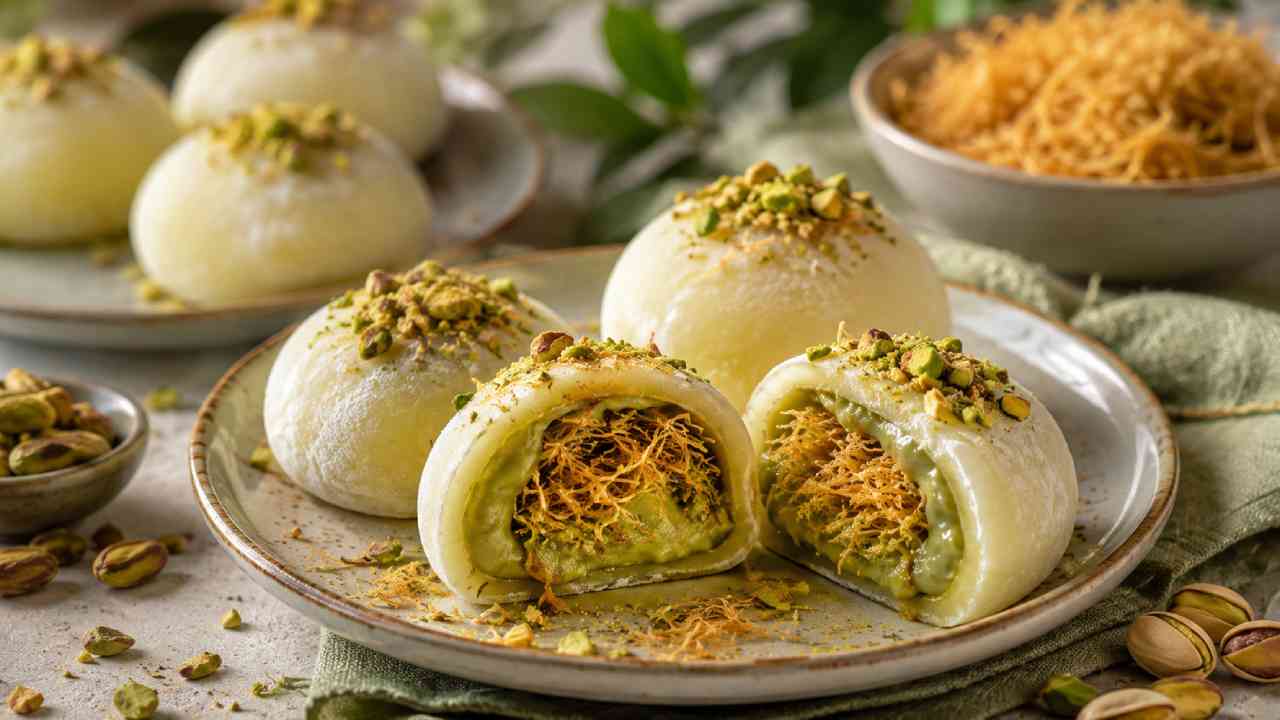
The biggest surprise arrives from the kataifi. These fine pastry strands can become exceptionally crisp when toasted with butter. Once golden, they develop a delicate crunch and a warm, toasted aroma. The crispy strands are then combined with pistachio cream or layered inside the filling. As a result, the texture changes immediately when the mochi is bitten. First comes the soft outer shell. Next comes the creamy pistachio. Then, the toasted pastry breaks with a light crunch. This sequence makes the dessert more engaging to eat. However, keeping kataifi crispy requires attention. Moisture from the filling can gradually soften the pastry. Therefore, the strands should be toasted thoroughly before they are combined with other ingredients. The filling should also avoid excessive moisture. When these details are handled correctly, the contrast between chewy mochi and crunchy kataifi becomes the dessert’s strongest feature.
Pistachio and Kataifi Give the Dessert a Modern Twist
The pistachio-and-kataifi pairing has gained broad attention through modern chocolate and pastry creations. In particular, chocolate bars filled with pistachio cream and crispy pastry helped introduce this texture combination to a wider audience. Bakers and dessert makers have since adapted similar flavors into cookies, cheesecakes, croissants, and other sweets. Mochi offers another interesting format. Unlike chocolate, its soft and flexible texture creates a stronger contrast with crispy pastry. Moreover, its relatively mild flavor gives pistachio more room to stand out. This illustrates how modern fusion desserts often develop. A successful flavor combination moves from one format into another while gaining a different eating experience. However, simply combining popular ingredients does not guarantee a good dessert. The proportions still matter. Pistachio should remain noticeable, kataifi should provide crunch, and mochi should hold everything together without dominating the bite.
Chocolate Can Add Another Layer of Flavor
Chocolate can make Pistachio Kunafa Mochi even richer, although it is not essential. Dark chocolate works particularly well because its slight bitterness can balance a sweet pistachio filling. Meanwhile, milk chocolate creates a softer and more familiar flavor. White chocolate offers extra creaminess, but it can quickly increase the sweetness. Therefore, a thin layer usually works better than a heavy coating. Another option is to place a small chocolate center inside the pistachio mixture. When the mochi is cut open, several layers become visible at once. This can make the dessert visually appealing while adding another flavor dimension. Still, restraint remains important. Pistachio, kataifi, and mochi already create a complex combination. Too much chocolate may distract from those elements. In my opinion, chocolate works best as an accent rather than the main attraction. It should support the nutty filling while preserving the dessert’s distinctive texture.
Moisture Control Keeps Kataifi Crisp
Texture is one of the most important technical challenges in this dessert. Mochi naturally contains moisture, while pistachio cream can also soften surrounding ingredients. Kataifi, however, tastes best when it remains crisp. Therefore, moisture control becomes essential. First, the pastry strands should be toasted until evenly golden and dry. Butter helps them brown while adding a richer aroma. Next, they should cool completely before being mixed with the pistachio filling. Adding warm kataifi to a creamy mixture can create unwanted condensation. In addition, the pistachio filling should have a thick consistency rather than a runny one. Storage time also matters. Like many desserts built around contrasting textures, the experience may change as the pastry absorbs moisture. Consequently, preparing reasonable batches can help preserve the intended texture. This small technical detail separates an ordinary version from one that delivers a clear chewy, creamy, and crunchy sensation.
Read Also: French Onion Bread Steals the Spotlight with Layers of Cheese and Flavor
The Cut-Open Look Makes It Visually Appealing
Appearance has become an important part of modern dessert culture. Pistachio Kunafa Mochi naturally lends itself to an attractive presentation. From the outside, it can look simple and understated. However, cutting it in half reveals several contrasting layers. The pale mochi shell surrounds a green pistachio center. Golden kataifi strands then create another visual contrast inside. Chopped pistachios can be scattered over the top for additional texture and color. Some versions may also use cocoa, chocolate drizzle, or a light dusting of pistachio powder. Nevertheless, decoration should not become excessive. A clean presentation makes the interior more noticeable. The cut-open view is especially effective because it immediately explains what makes the dessert different. Viewers can see the soft shell, creamy center, and crunchy pastry before tasting it. Therefore, its visual appeal comes naturally from the ingredients rather than complicated decoration.
Japanese and Middle Eastern Influences Meet in One Dessert
One fascinating aspect of this dessert is the meeting of culinary ideas from different regions. Mochi is strongly connected to Japanese culinary tradition and has existed in many forms for generations. Meanwhile, kunafa or knafeh belongs to a broad family of beloved Middle Eastern desserts, although recipes and spellings vary across regions. Kataifi-style pastry strands are also used in various sweets around the Eastern Mediterranean and Middle East. Modern Pistachio Kunafa Mochi does not replace these traditional foods. Instead, it borrows recognizable elements and places them in a new format. This distinction is important when discussing fusion cuisine. Understanding the origins of individual components gives readers more context and respects the traditions behind them. At the same time, contemporary pastry chefs often experiment across culinary boundaries. Therefore, this dessert can be viewed as a modern interpretation built around familiar techniques, ingredients, and textures from different food cultures.
Pistachio Kunafa Mochi Shows Why Texture Matters in Modern Desserts
The appeal of Pistachio Kunafa Mochi ultimately comes from balance. Its chewy shell would feel incomplete without the creamy center. Likewise, pistachio cream becomes more interesting when crispy kataifi interrupts its smooth texture. The dessert also demonstrates why modern sweets do not need extreme sweetness to feel indulgent. Nutty pistachio, toasted pastry, and a small amount of salt can create depth without overwhelming the palate. Meanwhile, the mochi wrapper provides a mild base that connects everything. This balance is also what makes the concept worth exploring beyond its visual appeal. Trends may introduce people to new combinations, but good flavor determines whether they remain interesting. In this case, each component has a clear role. Mochi brings chewiness, pistachio provides richness, and kataifi delivers crunch. Together, those elements create a fusion dessert with a distinctive personality and a memorable bite.