Pavlova, the Crispy Meringue Dessert with a Marshmallow-Soft Center
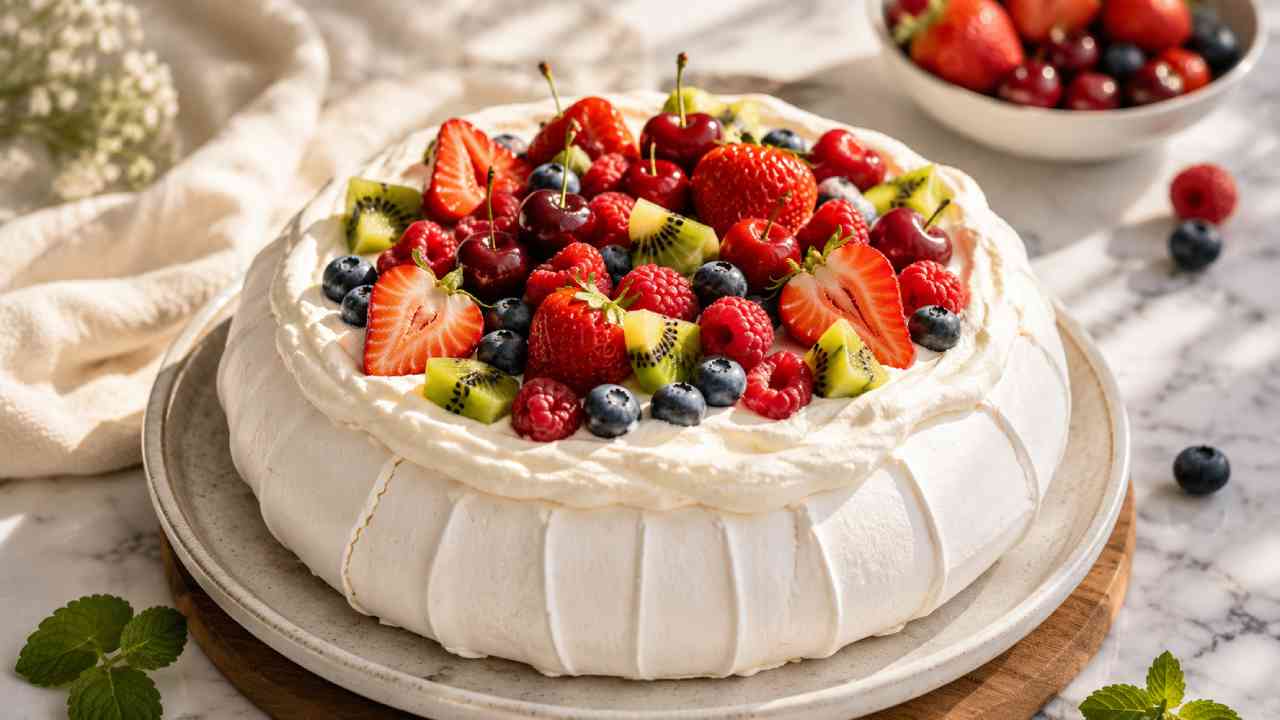
TastyPlatePedia – Pavlova is a beautiful meringue-based dessert known for its remarkable contrast in texture. The outside develops a delicate, crisp shell. Meanwhile, the center stays soft, airy, and slightly chewy like a marshmallow. Whipped cream and colorful fresh fruit usually cover the top. As a result, every bite combines sweetness, creaminess, and refreshing acidity. Strawberries, kiwi, raspberries, and passion fruit are among the most popular choices. Although the dessert looks sophisticated, its basic ingredients are surprisingly simple. Egg whites and sugar create the foundation, while cornstarch and a small amount of acid can help shape its characteristic texture. However, technique matters greatly. The egg whites need careful whipping, and the sugar should dissolve properly. Furthermore, gentle baking helps protect the delicate structure. This balance between simple ingredients and careful preparation is one reason Pavlova remains such an appealing classic.
Read Also: London Chocolate Cake Goes Viral, Salted Caramel Center Sparks Curiosity
The Dessert Was Named After Anna Pavlova
The elegant name has an equally fascinating story. Pavlova was named after Anna Pavlova, the celebrated Russian ballerina who toured Australia and New Zealand during the 1920s. Her performances attracted enormous attention at the time. Consequently, foods and other products began appearing with her name attached to them. The exact path from the ballerina to today’s famous meringue dessert is more complicated. Historical research has uncovered earlier desserts and recipes that shared some characteristics with modern Pavlova. Therefore, it is difficult to credit a single cook with creating it exactly as we know it today. Nevertheless, the connection with Anna Pavlova became part of the dessert’s identity. There is also something fitting about the association. Both the ballerina and the dessert evoke ideas of lightness and elegance. In my view, this cultural story gives the dish an extra dimension. People are not simply eating meringue, cream, and fruit. They are also experiencing a dessert connected with a century of culinary storytelling.
Australia and New Zealand Share a Famous Culinary Debate
Few desserts inspire a national debate quite like Pavlova. Australia and New Zealand have both developed deep cultural connections with it. For decades, people have debated which country deserves recognition for its creation. Historical evidence, however, makes the story less straightforward than a simple rivalry. Recipes and dishes carrying the Pavlova name appeared in the region during the early twentieth century. Some early examples were also different from the modern dessert. Moreover, European cooks had already developed various meringue desserts with fruit and cream. Therefore, modern Pavlova can be viewed as part of a wider evolution in pastry making. Today, the debate itself has become part of the dessert’s charm. Rather than reducing its appeal, the competing stories keep people interested in its history. More importantly, both Australia and New Zealand have helped preserve its popularity. It remains closely associated with celebrations, summer gatherings, and festive tables across both countries.
A Marshmallow-Soft Center Makes Pavlova Different
The defining feature of Pavlova is not simply its meringue base. Instead, the contrast between the exterior and center creates its distinctive character. A properly baked shell should feel crisp and fragile. Once sliced, however, it reveals a soft interior with a marshmallow-like consistency. This feature separates it from many small, dry meringues that remain crisp throughout. Several factors contribute to the difference. First, the meringue is shaped into a relatively thick round rather than small individual pieces. Additionally, cornstarch is often incorporated into the mixture. A small amount of vinegar or lemon juice may also be used. Baking temperature is equally important. High heat can brown the shell too quickly before the center develops properly. Therefore, slow and controlled baking is usually preferred. Small cracks may still appear as the dessert cools. Fortunately, they are not necessarily a failure. Once whipped cream and fruit are added, those imperfections can actually enhance its rustic appearance.
Ingredients for a Classic Homemade Pavlova
A successful recipe begins with a short list of carefully measured ingredients. Because egg whites provide most of the structure, the mixing bowl should be clean and free from grease. Additionally, separating the eggs carefully helps prevent yolk from entering the whites. This recipe makes one medium Pavlova suitable for sharing.
For the meringue:
● 4 large egg whites, at room temperature
● 220 g superfine or caster sugar
● 2 teaspoons cornstarch
● 1 teaspoon white vinegar or lemon juice
● 1 teaspoon vanilla extract
For the topping:
● 250 ml heavy whipping cream, chilled
● 1 tablespoon powdered sugar, optional
● 150 g fresh strawberries
● 2 kiwi fruits, peeled and sliced
● 100 g raspberries or blueberries
● 2 passion fruits
The fruit selection is flexible. However, slightly tart fruit works particularly well because it balances the sweetness of the meringue.
How to Make Pavlova Step by Step
Making Pavlova requires patience rather than complicated pastry skills. Most importantly, avoid rushing while adding the sugar. Gradual mixing helps create a smooth and stable meringue.
- Preheat the oven to 130°C and line a baking tray with parchment paper.
- Place the egg whites in a completely clean mixing bowl.
- Beat them at medium speed until soft peaks begin to form.
- Add the sugar gradually, about one spoonful at a time.
- Continue beating until the meringue becomes thick, glossy, and firm.
- Check the mixture by rubbing a little between your fingers. It should feel mostly smooth rather than heavily grainy.
- Gently fold in the cornstarch, vinegar, and vanilla.
- Spoon the mixture onto the prepared tray and form a thick circle.
- Create a shallow depression in the center for the cream and fruit.
- Place it in the oven and bake gently for about 75–90 minutes.
- Turn off the oven and allow the meringue to cool gradually inside.
- Whip the chilled cream until soft peaks form.
- Spread the cream over the completely cooled meringue.
- Arrange the fresh fruit on top just before serving.
Simple Tips for Making Better Pavlova
Humidity, egg whites, sugar, and oven temperature can all influence the final result. Therefore, understanding a few basic techniques makes the process more reliable.
- Use room-temperature egg whites because they generally whip more easily.
- Keep the bowl and whisk completely clean and dry.
- Avoid allowing any egg yolk to enter the whites.
- Add sugar slowly instead of pouring it in at once.
- Continue beating until the mixture looks glossy and holds firm peaks.
- Avoid excessive mixing after adding cornstarch and vinegar.
- Bake at a low temperature to protect the delicate shell.
- Do not repeatedly open the oven while the meringue is baking.
- Let it cool gradually to reduce sudden temperature changes.
- Add whipped cream and fruit shortly before serving.
- Choose tart fruit if you prefer a less intensely sweet dessert.
- Do not worry about a few cracks because they are common in homemade Pavlova.
These details may seem small. However, together they make a noticeable difference to the finished dessert.
Fresh Fruit Balances the Sweet Meringue
Pavlova would feel very different without its colorful topping. Since the meringue contains a considerable amount of sugar, fresh fruit introduces acidity and freshness. Passion fruit is particularly effective because its sharp tropical flavor cuts through both the sweet shell and rich cream. Similarly, strawberries and raspberries provide a pleasant sweet-tart contrast. Kiwi contributes bright color as well as a refreshing flavor. However, the classic combinations are not the only possibilities. Mango, peaches, cherries, figs, and mixed berries can create seasonal variations. The key is balance. Adding several extremely sweet toppings may overwhelm the dessert. On the other hand, combining creamy, sweet, and acidic elements keeps each bite interesting. Visually, fruit also transforms a simple white meringue into an elegant centerpiece. That visual appeal has helped Pavlova remain relevant in modern food photography. It looks luxurious on the table, yet the presentation can still feel natural and inviting.
Read Also: Asian Unagi Don, Japanese Grilled Eel Rice with Sweet Savory Sauce
Pavlova Has Become a Favorite for Celebrations
Food often becomes memorable because of where and when people eat it. Pavlova demonstrates this particularly well. In Australia and New Zealand, it has long been associated with gatherings and festive occasions. Its combination of meringue, cream, and fresh fruit also works naturally during warmer weather. As a result, the dessert is commonly connected with summer entertaining and Christmas celebrations in the Southern Hemisphere. Furthermore, a large Pavlova works well as a centerpiece for a shared table. Guests can see the fruit before the first slice is served, which adds to the sense of occasion. Modern bakers have also adapted the concept into miniature portions and layered versions. Still, the classic round presentation remains instantly recognizable. In my view, this ability to move between tradition and modern presentation explains much of its lasting appeal. The recipe can change slightly, yet its signature combination of textures remains familiar.
Why This Classic Dessert Still Feels Modern
Dessert trends often favor elaborate decorations and complicated techniques. Nevertheless, Pavlova proves that a classic can remain visually impressive without becoming overly complex. Its appeal comes from contrast. The crisp shell breaks beneath a spoon, revealing a soft center. Lightly whipped cream then adds richness, while fresh fruit introduces brightness and acidity. Moreover, every Pavlova develops a slightly different appearance. Cracks, uneven peaks, and flowing cream can make a homemade version look more inviting rather than imperfect. Bakers can also change the fruit according to season without altering the core recipe. This adaptability keeps the dessert relevant while preserving its recognizable identity. More than a century after Anna Pavlova’s famous tours, her name continues to appear on dessert tables far beyond Australia and New Zealand. Ultimately, that longevity says something important about traditional food: when flavor, texture, presentation, and storytelling work together, a recipe does not need constant reinvention to remain memorable.