Chickpea Spinach Curry, A Wholesome Bowl Packed with Flavor
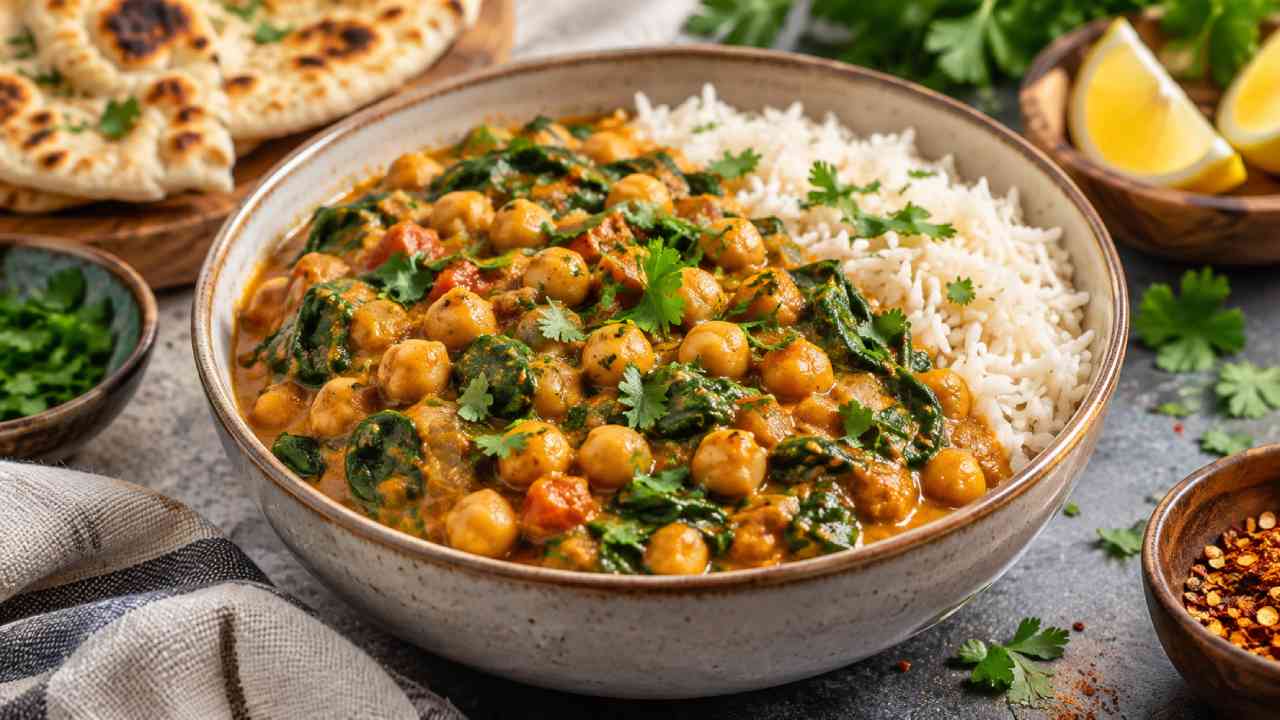
TastyPlatePedia – Chickpea Spinach Curry brings simple ingredients together in a warm and satisfying bowl. Tender chickpeas meet fresh spinach, tomatoes, and fragrant spices in every spoonful. As a result, the dish feels comforting without relying on complicated cooking methods. It also works well for anyone who wants to add more plant-based meals to their routine. Chickpeas provide protein and fiber, while spinach adds color and valuable nutrients. Meanwhile, ginger, cumin, turmeric, and garam masala create a deep aroma. The finished curry tastes rich, earthy, and gently spiced. Better still, you can adjust the heat and texture to suit your preference. This balance makes the recipe suitable for lunch or a relaxed weeknight dinner. It proves that wholesome cooking does not need to feel plain. Instead, familiar pantry ingredients can become a colorful meal packed with character.
Read Also: Chocolate Banana Baked Oats Turn Simple Oatmeal Into Dessert
Why Chickpea Spinach Curry Deserves a Place on Your Table
There is something inviting about a meal that tastes comforting yet remains surprisingly simple. Chickpea Spinach Curry delivers exactly that experience. Chickpeas have a mild, nutty flavor that absorbs spices beautifully. Spinach, on the other hand, adds freshness and a gentle earthy note. Therefore, neither ingredient dominates the dish. Instead, they create a balanced base for the aromatic curry sauce. Another advantage is flexibility. You can serve this curry for a casual family dinner or prepare it ahead for lunch. It also pairs with several side dishes. Rice makes it more filling, while flatbread offers a traditional way to scoop up the sauce. For a lighter option, quinoa works well too. In my view, this versatility is one reason the dish deserves attention. It is approachable enough for beginners. However, its layered flavors still make it interesting for experienced home cooks.
The Nutritional Appeal of Chickpeas and Spinach
Chickpeas are especially useful in plant-forward cooking because they offer both protein and dietary fiber. According to USDA FoodData Central data, cooked chickpeas also provide nutrients such as folate, iron, and magnesium. Spinach adds another nutritional layer. It contains vitamin K, folate, carotenoids, and several minerals. Consequently, combining these ingredients creates more than an appealing texture. It also produces a meal with a diverse nutritional profile. However, a healthy dish depends on the complete recipe rather than one ingredient alone. Portion size, salt, cooking oil, and side dishes still matter. For that reason, this curry works best when prepared with moderate amounts of oil and salt. Fresh vegetables can also be added for more variety. Overall, chickpeas and spinach form a practical foundation for a balanced meal. They are widely available, easy to prepare, and versatile enough for everyday cooking.
Aromatic Spices Build the Character of the Curry
A memorable Chickpea Spinach Curry needs more than chickpeas and greens. The spices give the dish its personality. Cumin provides a warm and earthy foundation, while turmeric contributes depth and a golden tone. Coriander adds a mild citrus-like quality. Meanwhile, garam masala brings several warm spice notes together near the end of cooking. Fresh ginger and garlic are equally important. They create a fragrant base before the tomatoes and chickpeas enter the pan. However, more spice does not always mean better flavor. Balance matters. Adding excessive garam masala, for example, can hide the natural character of the vegetables. Therefore, start with modest amounts and adjust gradually. Toasting the spices briefly in oil can also release their aroma. This small step makes a noticeable difference. In practice, good curry often comes from careful layering rather than simply adding every spice at once.
Ingredients for a Flavorful Homemade Curry
This recipe uses everyday ingredients and does not require specialist equipment. Canned chickpeas make preparation faster. However, chickpeas cooked from dry beans work equally well. Choose fresh spinach with bright leaves whenever possible. Additionally, ripe tomatoes will help create a naturally flavorful sauce.
Ingredients:
• 2 cups cooked chickpeas, drained and rinsed
• 4 cups fresh spinach
• 1 medium onion, finely chopped
• 3 garlic cloves, minced
• 1 tablespoon fresh ginger, grated
• 2 medium tomatoes, chopped
• 1 tablespoon olive oil or another cooking oil
• 1 teaspoon ground cumin
• 1 teaspoon ground coriander
• ½ teaspoon turmeric
• 1 teaspoon garam masala
• ½ teaspoon chili powder, optional
• ¾ cup vegetable broth or water
• ½ cup light coconut milk, optional
• Salt to taste
• Fresh cilantro for serving
• 1 small lemon or lime
The coconut milk is optional. Without it, the curry tastes brighter and more tomato-forward. With it, the sauce becomes softer and creamier.
How to Make Chickpea Spinach Curry Step by Step
The cooking process is straightforward. Still, the order matters because each stage builds another layer of flavor. Keep the heat around medium while preparing the aromatic base. This helps prevent the garlic and spices from burning.
Steps:
- Heat the oil in a large pan over medium heat. Add the onion and cook until soft and lightly golden.
- Add the garlic and ginger. Stir for about one minute until they become fragrant.
- Add cumin, coriander, turmeric, and chili powder. Stir briefly so the spices bloom in the warm oil.
- Add the chopped tomatoes. Cook until they soften and begin forming a thick sauce.
- Stir in the chickpeas. Then, add the vegetable broth and mix everything well.
- Simmer for 8 to 10 minutes. This gives the chickpeas time to absorb the seasoned sauce.
- Add the spinach gradually. Stir until the leaves wilt into the curry.
- Pour in the coconut milk if you prefer a creamy texture. Simmer for another three minutes.
- Stir in the garam masala. Add salt and a squeeze of lemon or lime to taste.
- Turn off the heat and garnish with fresh cilantro before serving.
How to Create a Creamy Texture Without Making It Heavy
Creaminess can transform the curry, but it does not have to come from a large amount of coconut milk. One useful technique is to mash some chickpeas directly in the pan. Their natural starch helps thicken the sauce. As a result, the curry develops a richer texture without needing much extra fat. Another option is to blend a small portion of the cooked curry. Then, return it to the pan and stir thoroughly. If you prefer coconut milk, start with a small amount. Light coconut milk gives the sauce a gentle richness while allowing the spices to remain noticeable. Furthermore, avoid simmering the curry for too long after adding spinach. Overcooked spinach can lose its bright appearance and develop a softer texture than desired. Ideally, the final curry should be thick enough to coat a spoon. At the same time, it should remain loose enough to mix easily with rice or quinoa.
Read Also: Japanese Milk Bread Goes Viral as Its Cloud-Like Texture Wins Fans
Best Ways to Serve This Wholesome Curry
Serving choices can completely change how this curry feels as a meal. Basmati rice is a classic partner because its light texture absorbs the sauce well. Brown rice offers a nuttier flavor and additional whole-grain texture. Alternatively, quinoa creates a modern plant-forward combination. Warm whole-wheat flatbread is another excellent choice. It allows you to enjoy every bit of the fragrant sauce. For contrast, consider adding fresh cucumber, tomato, or a simple yogurt-style side. A squeeze of lemon also brightens the curry just before eating. Moreover, toppings can add texture without complicating the dish. Fresh cilantro, toasted pumpkin seeds, or thinly sliced scallions can work nicely. Still, avoid adding too many competing flavors. The curry already contains several aromatic spices. Therefore, simple accompaniments usually work best. A thoughtful side should support the curry rather than distract from its warm, earthy character.
Simple Tips for Better Flavor and Texture
Small adjustments can make Chickpea Spinach Curry noticeably better. Most importantly, taste the dish throughout cooking instead of seasoning everything at the end. This approach gives you more control over salt, acidity, spice, and texture.
Tips:
- Rinse canned chickpeas thoroughly before cooking to remove excess canning liquid.
- Sauté the onion until soft and lightly golden. This creates a sweeter and deeper base.
- Bloom dry spices briefly in oil, but do not let them burn.
- Add spinach near the end so it keeps more of its color and texture.
- Mash a few chickpeas if the sauce appears too thin.
- Add broth gradually because chickpeas will continue absorbing liquid.
- Finish with lemon or lime juice to balance the warm spices.
- Allow the curry to rest for several minutes before serving. The flavors will settle and blend.
These techniques are simple. Nevertheless, together they can make the final dish taste more polished and balanced.
A Practical Choice for Plant-Based Meal Prep
Another strength of this recipe is its suitability for meal preparation. The curry can be cooked in one batch and divided into individual portions. Moreover, its flavor often becomes more integrated after resting. This makes leftovers particularly convenient for lunch the following day. When storing the curry, place it in a sealed container after it has cooled appropriately. Keep rice or other accompaniments separately when practical. That way, they will maintain a better texture during reheating. You can also prepare the curry base ahead of time and add fresh spinach when reheating. This method helps preserve the green color. For variety, change the side dish throughout the week. One serving can accompany brown rice, while another can pair with quinoa or flatbread. Therefore, meal prep does not have to mean eating exactly the same plate repeatedly. A flexible base recipe makes healthy home cooking easier to maintain.
Why Simple Ingredients Can Produce Memorable Food
The charm of Chickpea Spinach Curry comes from transformation rather than complexity. On their own, chickpeas, spinach, tomatoes, and onions may seem ordinary. Once layered with toasted spices, ginger, and garlic, however, they develop a much deeper character. This is also a useful lesson for everyday cooking. Expensive ingredients are not always necessary for a satisfying meal. Technique can matter just as much. Browning the onions properly, blooming the spices, and balancing the final sauce with acidity can dramatically improve the result. Furthermore, the recipe leaves room for personal interpretation. More chili creates a fiery version, while coconut milk makes it gentler. Extra tomatoes produce a brighter sauce. In contrast, mashed chickpeas create a thicker consistency. Ultimately, this adaptability is what makes the dish worth returning to. It is colorful, comforting, practical, and easy to shape around different tastes.