Classic French Paris-Brest with Silky Praline Cream
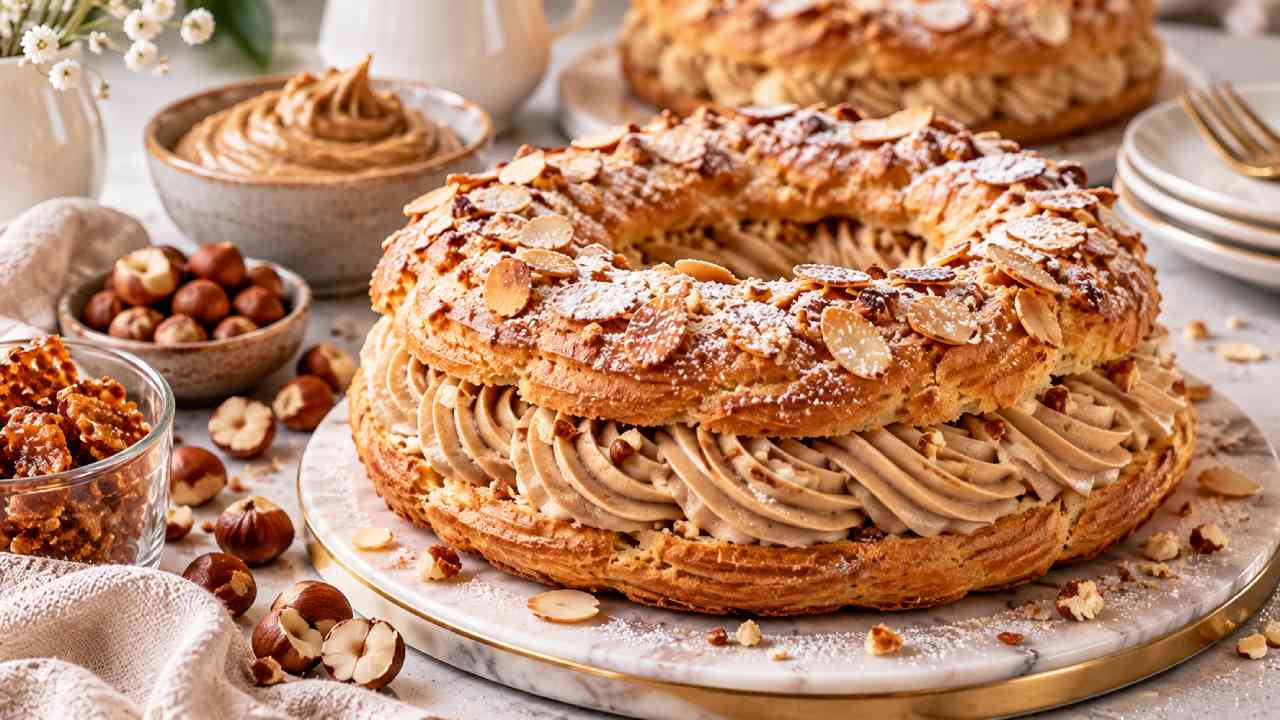
TastyPlatePedia – Paris-Brest is a classic French pastry that combines crisp choux pastry with rich praline cream. Its round shape immediately sets it apart from éclairs and traditional cream puffs. More importantly, every layer offers a different texture. The baked choux feels light and airy, while sliced almonds add a delicate crunch. Inside, smooth praline cream delivers warm notes of roasted nuts and caramel. As a result, the dessert feels luxurious without relying on complicated decoration. Paris-Brest also has a memorable story behind its appearance. The pastry was created in connection with the Paris–Brest–Paris cycling race, and its circular form represents a bicycle wheel. Today, pastry chefs continue to reinterpret the dessert in elegant ways. However, the classic combination of choux, almonds, and praline remains its strongest identity. That balance of history, technique, and flavor makes this French dessert worth discovering at home.
Read Also: Organic Oatmeal Bowl with Fresh Fruits for a Wholesome Morning
The Story Behind the Famous Wheel-Shaped Pastry
The history of Paris-Brest gives this dessert much of its personality. French pastry chef Louis Durand is widely credited with creating it in 1910. His pastry shop was located in Maisons-Laffitte, near the route of the Paris–Brest–Paris cycling event. Therefore, the dessert was shaped like a bicycle wheel as a tribute to the race. The original event itself began in 1891 and connected Paris with Brest in Brittany before returning to the capital. This background transformed a pastry into something closely connected with French sporting culture. Over time, Paris-Brest moved beyond its cycling origins and became a recognizable part of French pâtisserie. Even so, its circular design still tells the story without needing elaborate decoration. That historical connection also makes the dessert more interesting than an ordinary cream-filled pastry. Each ring carries a small reminder of early cycling culture while preserving the refined techniques associated with traditional French pastry making.
Choux Pastry Creates a Light and Delicate Structure
The foundation of Paris-Brest is pâte à choux, the same versatile dough used for éclairs and profiteroles. Unlike many cake batters, choux pastry depends heavily on steam for its rise. Water or milk is first heated with butter. Flour is then added and cooked briefly until a smooth dough forms. After the mixture cools slightly, eggs are incorporated gradually. This process creates a glossy dough that can hold its shape when piped. During baking, moisture inside the dough turns into steam. Consequently, the pastry expands and develops a hollow center. A well-made ring should feel crisp on the outside yet light inside. However, consistency matters greatly. Dough that is too loose may spread, while overly stiff dough may not rise properly. For that reason, eggs should be added carefully rather than all at once. Once this technique becomes familiar, the distinctive wheel-shaped shell becomes surprisingly manageable.
Silky Praline Cream Gives Paris-Brest Its Signature Flavor
While the choux provides structure, praline cream gives Paris-Brest its unmistakable personality. Traditional praline is made by caramelizing sugar with nuts, commonly hazelnuts, almonds, or a combination of both. The cooled mixture is then processed until it develops into a fragrant paste. This creates deep flavors of toasted nuts and caramel. For Paris-Brest, praline paste can be blended into a rich cream, often based on pastry cream and butter. The result should be smooth enough for piping but firm enough to hold beautiful ridges between the choux layers. Moreover, the nutty filling balances the relatively neutral pastry shell. A small pinch of salt can make the caramel and roasted flavors feel even more pronounced. Modern versions sometimes use lighter creams, but the classic praline character remains important. Without it, the dessert may resemble an ordinary cream puff ring rather than the distinctive French pastry people recognize as Paris-Brest.
Ingredients for a Classic Homemade Paris-Brest
A homemade Paris-Brest requires several components, yet the ingredient list remains approachable. Good butter, fresh eggs, and quality nuts make a noticeable difference because the dessert relies on simple flavors. In addition, measuring ingredients by weight improves consistency, especially when preparing choux pastry. For one medium pastry ring, prepare the following ingredients.
For the choux pastry:
● 125 ml water
● 50 g unsalted butter
● 75 g all-purpose flour
● 2–3 large eggs, added gradually
● 1/4 teaspoon salt
● 1 teaspoon granulated sugar
● Sliced almonds for topping
For the praline cream:
● 250 ml whole milk
● 3 egg yolks
● 50 g granulated sugar
● 20 g cornstarch
● 1 teaspoon vanilla extract
● 120 g unsalted butter, softened and divided
● 100 g hazelnut-almond praline paste
● A small pinch of salt
For finishing:
● Powdered sugar, as needed
● Extra toasted almonds, optional
How to Make Paris-Brest Step by Step
Making Paris-Brest becomes easier when the process is divided into clear stages. First, focus on building a stable choux ring. Then, prepare the praline cream while the pastry cools. Most importantly, allow every component to reach the proper temperature before assembly. This prevents the filling from melting and helps the pastry stay crisp.
- Preheat the oven to 190°C and line a baking tray with parchment paper.
- Heat the water, butter, sugar, and salt until the butter melts.
- Add the flour at once and stir firmly over low heat.
- Cook until the dough forms a ball and leaves a thin film on the pan.
- Cool briefly, then add the eggs gradually until the dough becomes glossy.
- Pipe the dough into a thick circular ring and scatter sliced almonds on top.
- Bake until deeply golden and dry, then cool completely.
- Prepare the pastry cream with milk, yolks, sugar, cornstarch, and vanilla.
- Cool the cream before blending in butter and praline paste.
- Slice the choux ring horizontally and pipe the praline cream generously inside.
- Replace the top ring and finish with a light dusting of powdered sugar.
Baking Technique Helps Prevent Choux from Collapsing
The oven stage can determine whether Paris-Brest becomes beautifully airy or disappointingly flat. Choux pastry needs enough heat to create steam quickly. That steam pushes the dough outward and produces its characteristic hollow structure. Therefore, avoid opening the oven door during the early baking stage. A sudden temperature drop can cause the pastry to collapse before its structure becomes firm. In addition, the choux should develop a deep golden color rather than remain pale. Pale pastry often contains excess moisture, which can soften the shell after cooling. Once the ring appears properly baked, some bakers lower the temperature briefly to help dry the interior. A small opening can also release trapped steam near the end of baking. However, oven performance varies, so visual cues remain important. The finished ring should feel light for its size and maintain its shape after cooling. These details make the final dessert much easier to fill and serve.
Read Also: Rosemary Focaccia Goes Viral Again as Its Irresistible Aroma Wins Over Food Lovers
Tips for Smooth and Stable Praline Cream
The filling deserves just as much attention as the choux because it defines the flavor of Paris-Brest. Temperature control is particularly important when working with butter-based praline cream. If the components are too warm, the filling may become loose. Meanwhile, ingredients that are too cold can produce a grainy or uneven texture. A few practical steps can improve the result considerably.
- Toast the nuts before making praline to deepen their natural flavor.
- Allow caramelized nuts to cool completely before processing them.
- Blend the praline long enough to develop a smooth paste.
- Cook the pastry cream until it thickens properly.
- Cover the cream directly on its surface while cooling to prevent a skin.
- Use softened butter rather than melted butter for better structure.
- Combine components at similar temperatures whenever possible.
- Add praline paste gradually and taste before adding more.
- Chill loose cream briefly before piping it into the pastry.
- Assemble the dessert close to serving time for the best texture.
Texture Makes Every Slice of Paris-Brest Memorable
A successful Paris-Brest is defined by contrast. The upper choux layer should offer a gentle crispness before giving way to its airy interior. Meanwhile, toasted almonds provide another layer of crunch. The praline cream changes the experience completely. It should feel smooth and silky, yet stable enough to remain between the pastry layers. Moreover, roasted hazelnut and almond notes bring depth that plain vanilla cream cannot provide. Caramel adds warmth, while a small amount of salt can sharpen the overall flavor. This balance explains why the dessert can feel rich without becoming one-dimensional. In my view, the best versions do not overload the pastry with sweetness. Instead, they allow toasted nuts, butter, and caramel to share the spotlight. Serving smaller slices also works well because praline cream is naturally rich. Paired with coffee or unsweetened tea, Paris-Brest becomes an elegant dessert with enough contrast to keep every bite interesting.
Modern Variations Keep the French Classic Fresh
Although classic Paris-Brest remains centered on praline, modern pastry chefs often explore new flavors. Pistachio cream creates a greener, slightly earthy variation. Coffee can add bitterness that balances the sweet filling. Chocolate works particularly well with roasted hazelnut, while salted caramel strengthens the dessert’s toasted profile. Some pastry chefs also create individual Paris-Brest rings instead of one large centerpiece. These smaller portions are easier to serve and provide more crisp pastry in every bite. Nevertheless, successful variations usually preserve the essential structure: ring-shaped choux, a creamy filling, and contrasting textures. That recognizable framework allows experimentation without losing the dessert’s identity. For home bakers, mastering the classic version first is a useful approach. Once the choux consistency and praline cream become familiar, different flavors are easier to introduce. Ultimately, Paris-Brest shows how one historic French pastry can remain relevant while still leaving plenty of room for creativity.