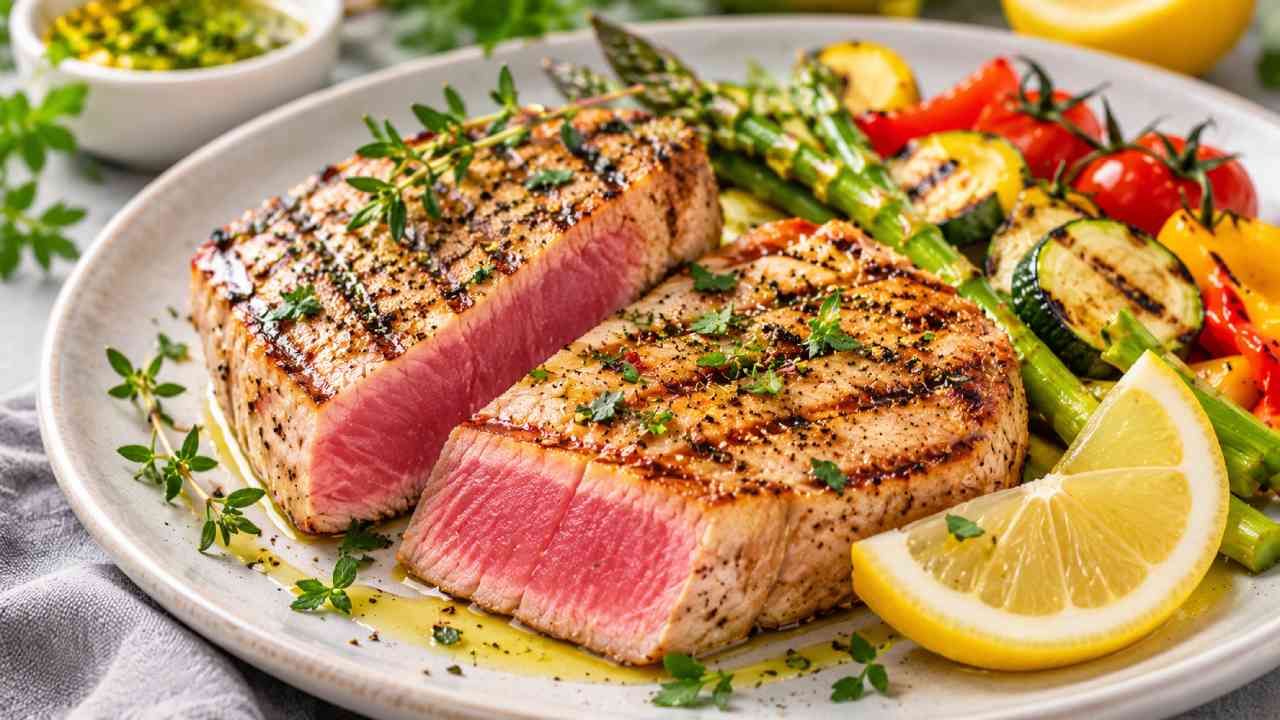
Grilled Tuna Steak with Lemon and Fresh Herbs
TastyPlatePedia – Grilled Tuna Steak with Lemon and Fresh Herbs brings together fresh flavor, simple seasoning, and satisfying texture. Thick tuna steaks develop a savory surface when they meet a hot grill. Meanwhile, fresh lemon adds brightness without hiding the natural taste of the fish. Herbs such as parsley and thyme bring another layer of aroma. As a result, the dish feels fresh yet satisfying. Grilled Tuna also works well for lunch or dinner because it pairs easily with vegetables and whole grains. More importantly, the recipe does not depend on a heavy sauce. A simple marinade can give the tuna plenty of character. Good ingredients and careful cooking make the biggest difference here. Therefore, this recipe is ideal for anyone who wants a straightforward fish dish with a restaurant-inspired presentation.
Read Also: Blueberry Oat Cups, A Healthy and Easy Baked Dessert
Grilled Tuna Gets Its Character from Simple Ingredients
The beauty of Grilled Tuna comes from keeping the ingredient list simple. Tuna has a firm texture and a distinctive savory flavor. Therefore, strong sauces are not always necessary. Lemon juice brings acidity, while olive oil helps coat the surface before grilling. Garlic adds depth without becoming too dominant. Meanwhile, fresh herbs create a clean aroma that works naturally with seafood. Black pepper adds gentle warmth to the final dish. Together, these ingredients create balance instead of covering the tuna. The thickness of the steak also matters. A thicker piece is easier to grill while maintaining a pleasant texture inside. However, cooking time will depend on thickness and preferred doneness. For food safety, people in higher-risk groups should choose fully cooked fish. Ultimately, fresh ingredients and careful heat control matter more than complicated seasoning.
Ingredients for Grilled Tuna Steak
A good Grilled Tuna recipe starts with quality tuna steaks and fresh seasonings. Choose tuna with a clean smell and firm texture. If using frozen tuna, thaw it safely in the refrigerator before cooking. Then, pat the surface dry with paper towels. Removing excess moisture helps the exterior sear more effectively. Fresh lemon juice is preferable because it gives the marinade a brighter flavor. In addition, use herbs that still smell fresh and vibrant. These ingredients make approximately two servings.
● 2 tuna steaks, about 150–200 grams each
● 2 tablespoons olive oil
● 2 tablespoons fresh lemon juice
● 1 teaspoon lemon zest
● 2 garlic cloves, finely minced
● 1 tablespoon chopped fresh parsley
● 1 teaspoon fresh thyme leaves
● 1/2 teaspoon black pepper
● 1/2 teaspoon salt, or to taste
● Lemon wedges for serving
● Fresh parsley for garnish
How to Prepare the Lemon and Herb Marinade
The marinade should support the tuna rather than overpower it. In particular, lemon needs to be used carefully because its acidity can change the surface texture of fish. Therefore, a short marinating time works well for this recipe. Olive oil balances the acidity and helps distribute the herbs across the tuna. Garlic and pepper then add a deeper savory note. Preparing the marinade takes only a few minutes.
- Add olive oil and fresh lemon juice to a small bowl.
- Add lemon zest, minced garlic, parsley, and thyme.
- Season the mixture with salt and black pepper.
- Stir until the ingredients are evenly combined.
- Place the tuna steaks in a shallow dish.
- Pour the marinade over the tuna and coat both sides.
- Refrigerate for about 15 to 20 minutes before grilling.
Preparing Tuna Before It Reaches the Grill
Proper preparation helps Grilled Tuna cook more evenly. First, remove the tuna from the refrigerator shortly before cooking. Next, take it out of the marinade and allow excess liquid to drip away. Too much liquid can reduce browning on the surface. However, there is no need to wipe away every piece of herb. A small amount can remain and add aroma while the fish cooks. At the same time, preheat the grill or grill pan thoroughly. A hot cooking surface helps create an appealing exterior quickly. Lightly oiling the grill can also reduce sticking. Because tuna is relatively lean, careful timing is important. Overcooking can make its texture dry. For that reason, prepare the side dishes before grilling the fish. Once the tuna reaches the grill, the cooking process moves quickly.
How to Grill Tuna Steak with Better Texture
Cooking time depends on the thickness of the tuna and the desired level of doneness. Therefore, visual cues and temperature are more useful than relying only on the clock. The exterior should develop visible grill marks and a lightly browned surface. Meanwhile, the center can be cooked according to preference and food-safety needs. The USDA recommends cooking fin fish to an internal temperature of 145°F, or about 63°C. Use a food thermometer when you need greater accuracy.
- Preheat the grill or grill pan over medium-high to high heat.
- Lightly oil the cooking surface to help prevent sticking.
- Remove excess marinade from the tuna steaks.
- Place the tuna on the hot grill without moving it immediately.
- Grill until the first side develops clear grill marks.
- Turn the tuna carefully and continue cooking the second side.
- Check the internal temperature according to your preferred doneness and safety needs.
- Transfer the tuna to a clean plate and let it rest briefly before serving.
Lemon and Fresh Herbs Keep the Flavor Bright
Lemon plays an important role in this dish. Its acidity cuts through the rich taste of tuna and makes each bite feel lighter. However, too much lemon can dominate the fish. For this reason, part of the lemon is used in the marinade, while fresh wedges are served on the side. Diners can then adjust the acidity themselves. Fresh herbs work in a similar way. Parsley adds a clean flavor, while thyme provides a slightly earthy aroma. Together, they create freshness without requiring a creamy dressing. Moreover, the green herbs and yellow lemon improve the presentation. A final sprinkle of chopped parsley makes the tuna look vibrant on the plate. This simple finishing step can make homemade Grilled Tuna look more polished without adding unnecessary ingredients.
Healthy Side Dishes That Pair Well with Grilled Tuna
Choosing the right side dishes can turn Grilled Tuna into a more balanced meal. Grilled asparagus, broccoli, zucchini, or green beans are simple options. They provide contrasting texture without competing with the tuna. A fresh salad with cucumber and tomatoes also works well. Meanwhile, roasted sweet potatoes can add a naturally sweet element. For a more filling meal, serve the tuna with brown rice, quinoa, or another whole grain. These choices provide carbohydrates alongside the protein-rich fish. However, portion size still matters. A healthy meal is not defined by one ingredient alone. Instead, balance comes from the overall combination of foods. In my view, grilled vegetables and a modest serving of quinoa work especially well here. Their flavors remain subtle, so the lemon-herb tuna stays at the center of the plate.
Tips for Making Grilled Tuna at Home
A few small details can make a noticeable difference when preparing tuna. Most importantly, avoid treating tuna like a slow-cooked fish. Its firm flesh responds well to relatively fast cooking over strong heat. In addition, keep the seasoning simple enough to preserve its natural flavor. Good preparation also reduces the chance of sticking or uneven browning.
- Choose tuna steaks with a firm texture and clean aroma.
- Thaw frozen tuna in the refrigerator rather than at room temperature.
- Pat the tuna dry before adding the marinade.
- Keep the lemon marinade relatively short to protect the texture.
- Preheat the grill well before adding the tuna.
- Avoid moving the tuna repeatedly while the first side sears.
- Use a food thermometer when accurate doneness is important.
- Serve the tuna soon after cooking for the best texture and flavor.
Grilled Tuna Offers Protein in a Simple Meal
Tuna naturally provides a substantial amount of protein. Therefore, it can be a useful centerpiece for a balanced meal. Grilling also allows the recipe to use relatively little added fat compared with heavily battered or deep-fried preparations. Still, the nutritional profile of the complete meal depends on the ingredients served alongside it. Vegetables, whole grains, and moderate amounts of dressing can keep the plate balanced. It is also worth remembering that tuna species can differ in mercury levels. For people who eat tuna frequently, variety matters. Rotating tuna with salmon, sardines, trout, and other seafood can provide a broader mix of nutrients while reducing reliance on one type of fish. Therefore, Grilled Tuna works best as one option within a varied eating pattern rather than something that needs to appear every day.
Read Also: Brownie Cheesecake Goes Viral, Fudgy and Creamy Combination Is Irresistible
A Simple Presentation Makes the Dish More Appealing
Presentation can transform a simple tuna steak into a dish that feels special. Start by placing grilled vegetables or greens on one side of the plate. Next, position the tuna slightly off-center rather than directly in the middle. Add lemon wedges nearby and scatter a small amount of fresh parsley over the top. If desired, drizzle a little olive oil around the plate. However, avoid adding too much sauce because the grill marks should remain visible. The contrast between golden-brown tuna, green herbs, and bright lemon creates an attractive natural color palette. Moreover, this presentation works well for both casual dinners and more polished meals. The result looks fresh without appearing overly complicated. That visual simplicity matches the recipe itself: quality tuna, controlled heat, fresh herbs, and enough lemon to make every bite feel lively.
Grilled Tuna Steak Keeps Healthy Cooking Simple
The strongest feature of this recipe is its simplicity. Grilled Tuna does not need complicated techniques to deliver an enjoyable meal. Instead, the recipe relies on fresh tuna, a balanced marinade, and careful grilling. Lemon brings brightness, while parsley and thyme add fragrance. At the same time, the hot grill creates a savory exterior that contrasts with the tuna’s firm texture. Pairing it with vegetables and whole grains can turn the steak into a complete meal. Furthermore, the recipe can be adjusted without changing its basic character. Parsley can be combined with dill, while thyme can be replaced with another mild herb. Ultimately, the goal is to let the tuna remain the main flavor. With thoughtful seasoning and controlled cooking, this straightforward dish can feel fresh, colorful, and satisfying.