Mango Sticky Rice: Thailand’s Famous Dessert Loved Around the World
TastyPlatePedia – Mango Sticky Rice is more than a simple dessert. It represents Thailand’s rich culinary heritage and warm hospitality. For many visitors, tasting this sweet dish becomes one of the highlights of their journey. The recipe combines sticky rice, ripe mangoes, and creamy coconut sauce into a dessert that feels both comforting and refreshing. Although the ingredients are simple, the balance of flavors creates an unforgettable experience. Moreover, local families have prepared this dessert for generations, especially during mango season. Today, Mango Sticky Rice has become a global favorite because it offers authentic flavors without complicated preparation. As people continue to explore Asian cuisine, this dessert remains one of the easiest ways to experience the heart of Thailand through food.
Read Also: Asian Mansaf: Jordan’s Traditional Lamb and Rice Dish Everyone Should Try
A Dessert Rooted in Thai Tradition
Thai cuisine is famous for balancing sweet, salty, sour, and spicy flavors. However, Mango Sticky Rice follows a different path by focusing on sweetness with a gentle touch of salt from the coconut sauce. Traditionally, families prepared this dessert during the peak mango harvest, when the fruit reached its best quality. As a result, seasonal celebrations often featured this colorful dish. Over time, restaurants and street vendors introduced it to international travelers. Consequently, visitors carried the memory of its unique taste back to their home countries. This cultural connection helped Mango Sticky Rice become an ambassador of Thai cuisine. Even today, many people associate this dessert with authentic Thai dining experiences.
The Simple Ingredients That Create Amazing Flavor
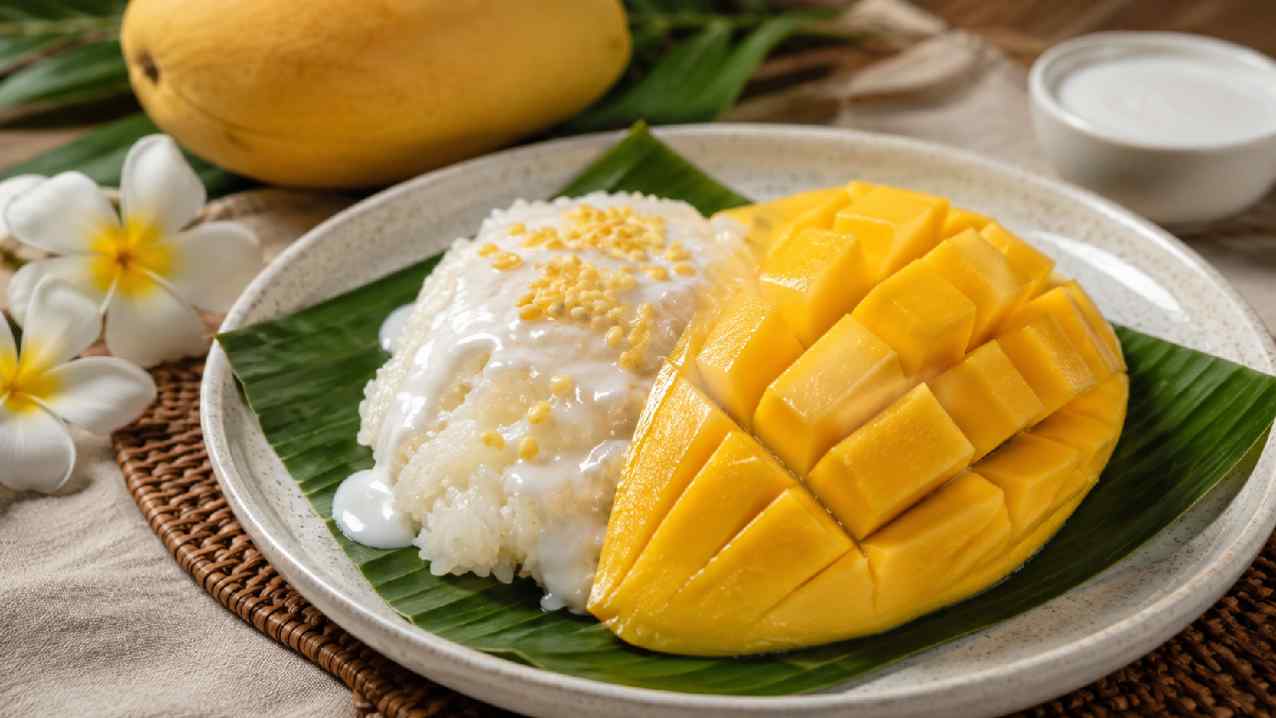
One reason Mango Sticky Rice remains popular is its short ingredient list. Sticky rice provides a soft and chewy texture that absorbs the creamy coconut mixture. Meanwhile, ripe yellow mangoes add natural sweetness and refreshing aroma. Coconut milk brings richness without overwhelming the fruit. A small amount of sugar and salt completes the flavor by creating perfect balance. In some regions, roasted sesame seeds or crispy mung beans are sprinkled on top for extra texture. Although the recipe appears straightforward, selecting high-quality ingredients makes a noticeable difference. Therefore, experienced cooks always recommend fresh mangoes and premium sticky rice for the best result.
Why People Around the World Love Mango Sticky Rice
Many desserts rely on chocolate or heavy cream. In contrast, Mango Sticky Rice feels lighter while still delivering satisfying sweetness. The combination of juicy fruit and creamy sticky rice appeals to many different tastes. Furthermore, it suits both warm tropical weather and elegant restaurant menus. Social media has also played an important role in its popularity. Beautiful presentations featuring bright yellow mango slices often attract millions of viewers online. Consequently, food lovers become curious and search for authentic recipes. Because of its attractive appearance and memorable flavor, Mango Sticky Rice continues to earn loyal fans across different cultures and generations.
Health Benefits Worth Knowing
Although Mango Sticky Rice is considered a dessert, it also contains several beneficial nutrients. Mangoes provide vitamin C, vitamin A, antioxidants, and dietary fiber that support overall health. Coconut milk contributes healthy fats that provide energy and create a satisfying texture. Sticky rice serves as a reliable source of carbohydrates for daily activities. Nevertheless, moderation remains important because the dessert contains added sugar and coconut milk. Therefore, enjoying reasonable portions allows people to appreciate both its flavor and nutritional value. When prepared with fresh ingredients, offers a balanced dessert compared with many highly processed sweet treats.
Read Also: Coconut Vanilla Organic Cake, A Tropical Dessert That Is Soft, Fragrant, and Naturally Delicious
The Best Time to Enjoy Mango Sticky Rice
In Thailand, the best season for Mango Sticky Rice usually arrives between March and May. During these months, mangoes become sweeter, juicier, and more fragrant. As a result, local markets display fresh fruit alongside vendors preparing sticky rice throughout the day. Tourists often discover that the dessert tastes even better when eaten fresh in a traditional market. However, many restaurants now serve it throughout the year by using carefully selected mango varieties. While seasonal fruit still provides the finest experience, quality preparation ensures that this beloved dessert remains enjoyable regardless of the calendar.
Easy Tips for Making Mango Sticky Rice at Home
Preparing Mango Sticky Rice at home is easier than many people expect. First, soak the sticky rice before steaming it to achieve the proper texture. Next, gently mix warm coconut milk with sugar and a small amount of salt before combining it with the cooked rice. Afterwards, allow the rice to absorb the liquid completely. Finally, serve it with ripe mango slices and drizzle extra coconut sauce on top. Some home cooks also add toasted sesame seeds for additional crunch. Although the process requires patience, the final dessert rewards every step with authentic Thai flavor that rivals restaurant-quality dishes.
Why Mango Sticky Rice Will Always Stay Popular
Food trends change every year, yet some traditional recipes continue to capture people’s hearts. Mango Sticky Rice belongs to that special category because it combines simplicity with exceptional taste. In addition, the dessert reflects Thailand’s culinary identity while remaining accessible to home cooks worldwide. Modern chefs often introduce creative versions, yet the original recipe remains the most appreciated. This lasting popularity proves that authentic recipes never lose their value. As more people search for genuine food experiences, will likely remain one of the world’s most admired desserts for many years to come. Its timeless appeal continues to inspire travelers, chefs, and dessert enthusiasts across every continent.