Coconut Mango Sago, A Creamy and Refreshing Tropical Dessert
TastyPlatePedia – Coconut Mango Sago is a refreshing tropical dessert that combines juicy ripe mangoes, creamy coconut milk, and chewy sago pearls. Each spoonful brings together sweet fruit, a smooth coconut base, and a pleasantly bouncy texture. Moreover, this dessert looks impressive without requiring complicated baking techniques. It is served chilled, which makes it especially appealing on warm days or after a rich meal. The recipe also allows plenty of flexibility. You can adjust the sweetness, add fresh fruit, or change the consistency to suit your preference. Although the finished dessert looks elegant, most of the ingredients are easy to prepare at home. In my view, that balance between simplicity and presentation explains much of its appeal. With ripe mangoes and properly cooked sago, a few basic ingredients can become a colorful dessert that feels both comforting and fresh.
Read Also: Organic Matcha Chia Pudding, A Creamy Green Treat Worth Trying
Coconut Mango Sago Brings Tropical Flavors Into One Bowl
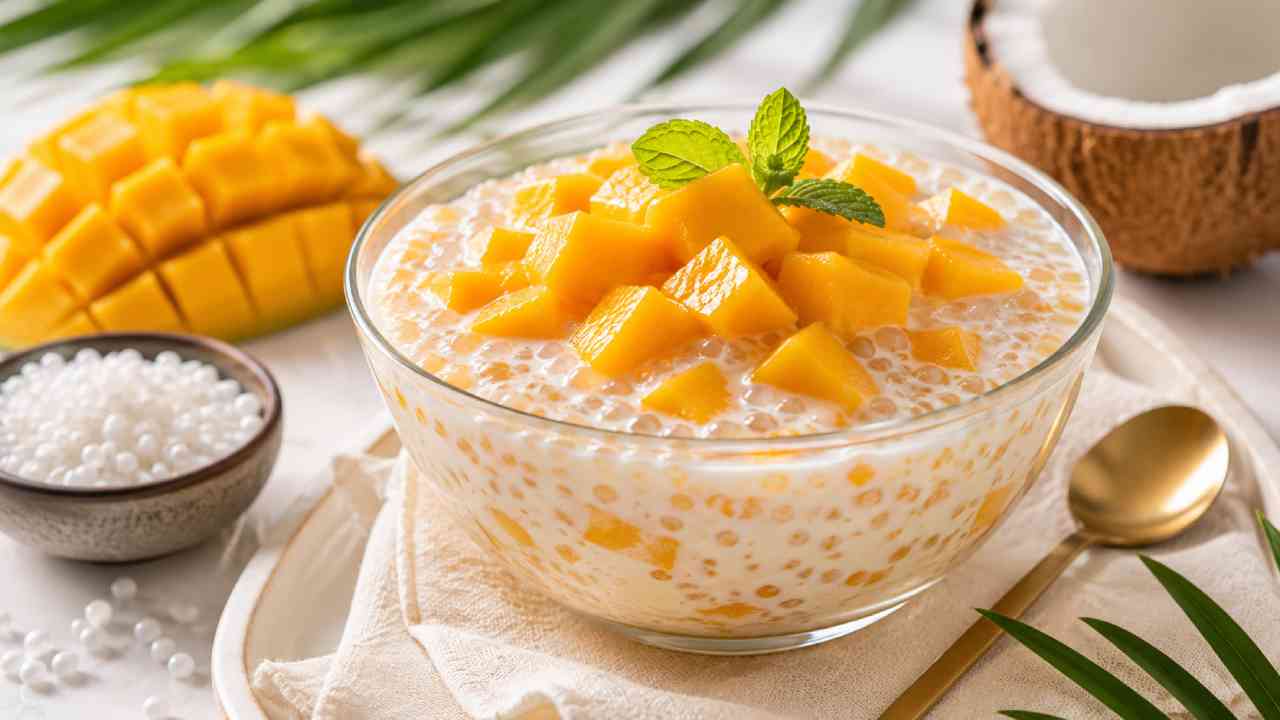
The charm of Coconut Mango Sago begins with its simple flavor combination. Ripe mangoes provide natural sweetness and a bright fruity aroma. Meanwhile, coconut milk contributes a creamy texture and subtle richness. These two ingredients complement each other rather than compete for attention. In addition, sago pearls create a chewy contrast against the smooth mango mixture. This combination makes the dessert more interesting than a simple mango pudding or smoothie. Temperature also plays an important role. Once chilled, the coconut base becomes refreshing while the mango retains its vibrant flavor. Therefore, the dessert works particularly well when you want something sweet without serving a heavy cake. A few fresh mango cubes on top also create an attractive finish. Ultimately, the recipe succeeds because each ingredient has a clear purpose in the final bowl.
The Dessert Has Roots in Hong Kong-Style Mango Sago
Coconut Mango Sago shares similarities with mango pomelo sago, a well-known dessert associated with Hong Kong cuisine. Mango pomelo sago became popular during the late 20th century and combines mango, pomelo, dairy or coconut elements, and small sago-like pearls. Over time, many variations appeared across Asia and beyond. Some recipes emphasize coconut milk, while others use evaporated milk or cream. Coconut Mango Sago offers a straightforward interpretation that puts mango and coconut at the center. Pomelo is optional rather than essential in this version. As a result, the recipe is easy to recreate even when pomelo is unavailable. Still, adding the citrus fruit can introduce a pleasant tart and slightly bitter contrast. Understanding these variations is useful because there is no need to treat every mango sago recipe as identical. Different versions can highlight different textures and flavors while maintaining the dessert’s refreshing character.
Ripe Mangoes Make a Noticeable Difference
Mango is the star ingredient, so its quality can greatly influence the final dessert. Ideally, choose ripe mangoes that smell fragrant and yield slightly when gently pressed. The flesh should taste naturally sweet with enough acidity to keep the flavor lively. If the mango is underripe, the puree may taste flat or sour. Consequently, you might need more added sugar. Very fibrous mango varieties can also produce a less silky texture. If possible, choose a variety with smooth flesh and a strong aroma. Part of the mango will be blended into the coconut mixture. The remaining fruit can be cut into cubes for topping. This approach provides two different mango textures in one serving. Moreover, using naturally sweet fruit allows you to reduce the amount of added sugar. Taste the mango before mixing the dessert rather than following the sugar measurement blindly.
Coconut Milk Creates a Smooth and Creamy Base
Coconut milk gives Coconut Mango Sago its signature tropical richness. However, balance is important. Too much thick coconut milk can overpower the mango. On the other hand, an overly diluted mixture may lack body. Combining coconut milk with regular milk creates a lighter consistency while keeping the coconut flavor noticeable. Plant-based milk can also be used depending on dietary preference. Additionally, a small pinch of salt can sharpen the overall flavor. It does not make the dessert salty. Instead, it helps balance the sweetness of mango and sugar. For a richer version, use a higher proportion of coconut milk. For something lighter, increase the amount of milk slightly. The best ratio ultimately depends on the mango and personal preference. Therefore, tasting the mixture before chilling is an important step that should not be skipped.
Ingredients for Homemade Coconut Mango Sago
This recipe makes approximately four servings. Because mangoes vary greatly in sweetness, treat the sugar measurement as a starting point rather than a strict requirement.
Main Ingredients:
● 2 large ripe mangoes
● 80 g small sago pearls or small tapioca pearls
● 200 ml coconut milk
● 100 ml whole milk or preferred milk
● 2 tablespoons sugar, or to taste
● 1 small pinch of salt
● ½ teaspoon vanilla extract, optional
● Fresh mango cubes for topping
Optional Toppings:
● Fresh pomelo pieces
● Toasted coconut flakes
● Young coconut flesh
● Fresh mint leaves
● Strawberries
● Kiwi
● Additional coconut milk
Using ripe fruit is especially important. If your mangoes are already very sweet, reduce the added sugar. Conversely, slightly tart mangoes may require a little more sweetness.
How to Cook Sago Pearls Without Making Them Clumpy
Properly cooked sago should feel pleasantly chewy rather than hard or mushy. Always check the package instructions because cooking times can vary between products.
Steps:
- Bring a large pot of water to a rolling boil.
- Add the sago pearls while stirring gently.
- Cook according to the package directions.
- Stir occasionally to prevent the pearls from sticking together.
- Continue cooking until the pearls become mostly translucent.
- Turn off the heat if the instructions require a resting period.
- Drain the cooked sago through a fine strainer.
- Rinse immediately under cold running water.
- Stir gently while rinsing to remove excess surface starch.
- Drain thoroughly before adding the pearls to the dessert.
Avoid leaving cooked sago sitting dry for too long. The pearls can begin sticking together. Therefore, prepare the mango mixture soon after the sago is ready.
How to Make Coconut Mango Sago Step by Step
Once the sago has been prepared, assembling the dessert is quick. Keep some mango cubes separate so they can be added just before serving.
Steps:
- Peel the ripe mangoes and remove the flesh from the stones.
- Reserve about one-third of the mango and cut it into small cubes.
- Place the remaining mango in a blender.
- Add coconut milk, milk, sugar, and a small pinch of salt.
- Add vanilla extract if you want a softer aromatic note.
- Blend until the mixture becomes smooth and creamy.
- Taste the mixture before adding more sugar.
- Transfer the mango mixture into a large bowl.
- Add the drained sago pearls.
- Stir gently until the pearls are evenly distributed.
- Cover the bowl and refrigerate until thoroughly chilled.
- Divide the dessert between serving glasses or bowls.
- Add fresh mango cubes on top.
- Finish with coconut flakes, pomelo, or mint if desired.
Serve the dessert cold for the freshest flavor and texture.
Getting the Right Creamy Consistency Is Simple
The ideal consistency should be creamy enough to coat a spoon but loose enough to eat comfortably. However, sago continues to interact with the liquid during storage. Therefore, the dessert may become thicker after refrigeration. If this happens, stir in a small amount of chilled milk or coconut milk before serving. Add the liquid gradually rather than pouring in too much at once. Conversely, if the mixture seems too thin, refrigerating it may naturally improve the consistency. The amount of mango puree also influences thickness. A fleshier mango usually creates a denser base. For this reason, exact measurements can still produce slightly different results from one batch to another. Rather than focusing only on measurements, observe the texture and adjust accordingly. This small step can make the finished dessert feel much more polished.
Pomelo Adds a Fresh Contrast to the Creamy Mango
Pomelo is an excellent addition if you want more complexity. Its juicy pulp brings mild acidity and a subtle bitterness. Consequently, it cuts through the sweetness of mango and the richness of coconut milk. Separate the pomelo flesh into small pieces and remove the tough membranes before serving. Then, scatter the pieces over the dessert with fresh mango cubes. However, pomelo is completely optional. Coconut Mango Sago can still taste balanced without it. Strawberries or kiwi can provide another fruity contrast. Young coconut flesh is also an interesting option because it adds a tender, slightly chewy texture. Meanwhile, toasted coconut flakes create a crisp element. These variations make the basic recipe easy to customize. Still, avoid adding too many toppings at once. Mango should remain the main flavor rather than becoming hidden beneath several competing ingredients.
Tips for Making Better Coconut Mango Sago
A few small details can significantly improve both flavor and texture. Most importantly, allow the ingredients to complement the mango instead of overwhelming it.
Tips:
- Choose fragrant, fully ripe mangoes for stronger natural sweetness.
- Taste the mango before deciding how much sugar to use.
- Cook sago in plenty of water to reduce sticking.
- Rinse cooked sago with cold water to remove excess starch.
- Drain the pearls well before mixing them with the mango base.
- Add a small pinch of salt to balance the sweetness.
- Chill the dessert before serving for a fresher taste.
- Add mango cubes shortly before serving for the best texture.
- Thin an overly thick mixture with chilled coconut milk.
- Add pomelo if you prefer a brighter and slightly tart contrast.
- Use clear serving glasses to showcase the dessert’s color and texture.
- Keep toppings simple so the mango remains the main attraction.
These adjustments are simple, yet they can make the dessert feel noticeably more refined.
Read Also: Soft Matcha Cream Buns with a Sweet and Creamy Filling
Coconut Mango Sago Is Easy to Customize
Another strength of Coconut Mango Sago is its flexibility. For a stronger coconut flavor, increase the coconut milk and reduce the regular milk. Alternatively, use more milk for a lighter finish. You can also blend only part of the mango and leave more fruit in cubes. This creates a chunkier texture. For a more colorful presentation, layer the mango mixture with fresh fruit in a clear glass. Meanwhile, toasted coconut can add a crisp finish. Some people also enjoy young coconut flesh for additional texture. However, moderation is important. Adding too many ingredients can distract from the clean mango-coconut combination. In my view, the best variations preserve the original character while adding only one or two contrasting elements. This keeps the recipe recognizable and makes each ingredient easier to appreciate.
Serving It Cold Makes the Dessert More Refreshing
Temperature changes the experience of this dessert considerably. When chilled, the mango mixture feels lighter and more refreshing. Coconut milk also becomes pleasantly creamy without feeling excessively rich. Therefore, refrigerate the assembled dessert before serving. Small glasses work well for individual portions, especially when serving it after a large meal. For a casual presentation, a simple bowl works equally well. Add the toppings at the last moment so they remain fresh. A few mango cubes and a small mint leaf are often enough to create an elegant appearance. If using toasted coconut, sprinkle it just before serving to preserve its crunch. The vivid yellow-orange color of mango naturally makes this dessert photogenic. As a result, elaborate decoration is unnecessary. Clean presentation usually works best.
A Simple Tropical Dessert Worth Making at Home
Coconut Mango Sago proves that an attractive dessert does not need complicated techniques. The recipe relies on three main characteristics: sweet mango, creamy coconut, and chewy sago. Together, they create a dessert with enough contrast to keep every spoonful interesting. Moreover, the recipe requires no oven and can be prepared ahead of serving. The sweetness is also easy to control because ripe mango already provides plenty of natural flavor. From a home cook’s perspective, this is one of the recipe’s strongest advantages. You can start with a simple version and gradually experiment with pomelo, coconut flakes, or other fresh fruit. Nevertheless, choosing good mangoes and cooking the sago correctly remain the most important steps. When those elements are handled well, the final dessert is creamy, colorful, refreshing, and distinctly tropical.