Lamington, Australia’s Iconic Cake Coated in Chocolate and Coconut
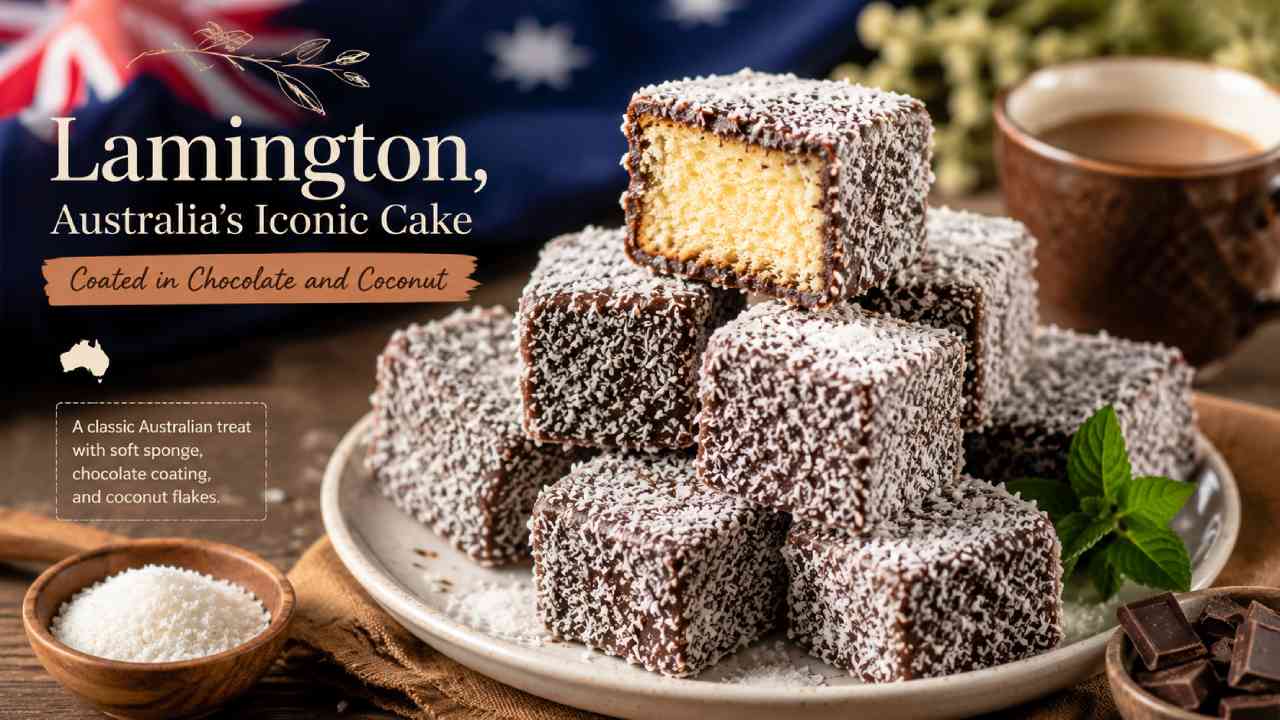
TastyPlatePedia – Lamington is one of Australia’s most recognizable sweet treats. At first glance, it looks surprisingly simple. A soft sponge cake is cut into neat squares. Then, each piece is coated in chocolate icing and rolled in desiccated coconut. However, that simple combination creates several textures in every bite. The sponge remains light and tender inside. Meanwhile, the chocolate adds sweetness and moisture around the edges. Finally, coconut creates a delicate texture on the outside. This contrast has helped Lamington remain popular for generations. Moreover, the cake carries a strong connection to Australian food culture. It often appears at bakeries, afternoon teas, community events, and family gatherings. In my view, its lasting appeal comes from familiarity rather than extravagance. Lamington proves that a memorable dessert does not need complicated decoration. Instead, a few well-balanced ingredients can create something distinctive.
Read Also: Soft Matcha Cream Buns with a Sweet and Creamy Filling
What Makes a Traditional Lamington So Distinctive?
A traditional Lamington is usually recognized by its square shape and coconut-covered surface. Sponge cake forms the foundation, so its texture plays an important role. Ideally, the cake should be firm enough to handle the coating process. At the same time, it should remain soft when eaten. The chocolate icing is generally thinner than a heavy frosting. As a result, it can cover the sponge without creating an overly thick shell. Some of the icing may also reach the outer layer of the cake. Next comes desiccated coconut, which sticks to the wet chocolate. Together, these elements create Lamington’s familiar appearance. More importantly, every component has a purpose. The sponge provides softness, chocolate brings richness, and coconut offers texture. Therefore, changing one element too much can alter the character of the finished cake.
The Story Behind Australia’s Famous Lamington
The history of Lamington is closely associated with Queensland. Its name has long been linked to Lord Lamington, who served as Governor of Queensland from 1896 to 1901. However, several stories surround the exact origin of the cake. One popular account describes sponge cake being coated in chocolate and coconut as a practical way to serve unexpected guests. Other historical discussions offer different details about how the recipe developed. Therefore, the charming stories surrounding its invention should not automatically be treated as established fact. What is much clearer is that Lamington became deeply connected with Australian baking culture. Over time, recipes appeared in households, bakeries, cookbooks, and community events. This history adds another layer to the dessert. Instead of being merely a chocolate-covered sponge, it represents how a straightforward recipe can gradually become part of a country’s culinary identity.
Why Chocolate and Coconut Work So Well Together
Chocolate and coconut are central to the character of a Lamington. Although the pairing seems straightforward, each ingredient balances the other surprisingly well. Chocolate icing adds sweetness and a slight cocoa bitterness. Meanwhile, coconut brings a mild nutty flavor and a drier texture. This contrast prevents the cake from feeling one-dimensional. The sponge also plays an important supporting role. Because it has a relatively neutral flavor, it allows the coating to stand out. Furthermore, a light chocolate icing can slightly moisten the cake’s outer surface. The coconut then attaches to that layer and creates the familiar finish. For me, this balance explains why Lamington does not require elaborate toppings. Each component contributes something different. As a result, the finished dessert feels richer than its short ingredient list might suggest. It is a good example of how thoughtful combinations often matter more than complexity.
Ingredients for a Classic Homemade Lamington
Making Lamington at home starts with a simple sponge cake. For the best result, allow the baked cake to cool completely before coating it. A slightly rested sponge is often easier to cut and handle because fresh cake can be fragile.
For the sponge cake:
• 180 g all-purpose flour
• 2 teaspoons baking powder
• 1/4 teaspoon salt
• 125 g unsalted butter, softened
• 150 g granulated sugar
• 2 large eggs
• 1 teaspoon vanilla extract
• 120 ml milk
For the chocolate coating:
• 300 g icing sugar
• 30 g unsweetened cocoa powder
• 25 g unsalted butter
• 120 ml warm milk
For the coating:
• 180–200 g desiccated coconut
For an optional filled version, prepare raspberry or strawberry jam and whipped cream. However, the classic unfilled version is already satisfying. More importantly, good-quality cocoa and fresh coconut can noticeably improve the final flavor.
How to Make Lamington Step by Step
The main challenge when preparing Lamington is keeping the sponge intact during coating. Therefore, work gently and avoid using cake that is still warm. Chilling the sponge briefly can also make the process easier.
Steps:
- Preheat the oven to 180°C. Grease and line a square baking pan with baking paper.
- Sift the flour, baking powder, and salt into a bowl. Set the mixture aside.
- Beat the softened butter and sugar until pale and creamy.
- Add the eggs one at a time. Then, mix in the vanilla extract.
- Add the dry ingredients gradually. Alternate them with the milk and mix gently.
- Pour the batter into the prepared pan. Smooth the surface before baking.
- Bake until the sponge is lightly golden and a skewer comes out clean.
- Allow the cake to cool completely. Then, cut it into even squares.
- Combine icing sugar, cocoa powder, butter, and warm milk until smooth.
- Dip each cake square quickly into the chocolate icing.
- Immediately roll each coated piece in desiccated coconut.
- Place the finished Lamingtons on a wire rack and allow the coating to set before serving.
Tips for Soft Sponge and a Neat Chocolate Coating
Small details can make homemade Lamington much easier to prepare. First, avoid overmixing the batter after adding the flour. Excessive mixing can make the sponge denser than intended. In addition, give the cake enough time to cool before cutting it.
Helpful tips:
- Bake the sponge a day earlier if possible. A rested cake is easier to coat.
- Chill the sponge briefly before dipping if it feels too fragile.
- Cut the cake into similar-sized squares for a cleaner presentation.
- Keep the chocolate icing fluid enough to create a thin coating.
- Dip each square quickly. Leaving it in the icing too long may make it soggy.
- Use two forks to handle the cake while coating it.
- Roll the chocolate-coated sponge in coconut immediately.
- Allow the finished cakes to rest before arranging them on a serving plate.
Most importantly, do not aim for an excessively thick chocolate layer. A balanced coating allows the sponge, cocoa, and coconut to remain distinct.
Jam and Cream Create a Richer Lamington Variation
Although the classic Lamington can be served without filling, another popular style adds jam and cream. In this version, each cake square is carefully sliced through the middle. Raspberry or strawberry jam is spread inside, followed by whipped cream. The two halves are then placed together before serving. This variation creates an attractive contrast when the cake is cut open. Golden sponge, red jam, white cream, dark chocolate, and coconut appear in distinct layers. Naturally, the flavor also becomes richer. The tartness of berry jam can balance the sweetness of the chocolate coating. Meanwhile, whipped cream adds a smooth texture. However, filled Lamingtons require more careful storage because of the fresh cream. Personally, I would choose the classic version for everyday serving. For celebrations or photography, though, the jam-and-cream variation creates a more dramatic presentation.
Read Also: Chicken Iskender Meals with Yogurt and Rich Tomato Sauce
Lamington Became More Than an Afternoon Tea Cake
One reason Lamington remains culturally interesting is its role beyond the bakery counter. In Australia, the cakes have long appeared at school events, community gatherings, and fundraising activities. The term “Lamington drive” became associated with fundraising efforts where boxes of cakes were sold to support schools, clubs, and other groups. That social connection gives the dessert a different kind of value. People may remember Lamington not only because of its flavor but also because of occasions connected with it. Food often works this way. A recipe becomes meaningful when it appears repeatedly during family traditions or community events. Consequently, even a simple square of sponge cake can carry memories. This human element is one reason traditional foods continue to survive despite constantly changing dessert trends. Lamington is not simply a recipe. For many people, it is also part of a shared culinary experience.
How Lamington Differs from an Ordinary Chocolate Cake
At first, comparing Lamington with chocolate cake might seem natural. However, their construction is quite different. A typical chocolate cake often contains cocoa or melted chocolate directly in the batter. Lamington usually begins with a plain sponge. Chocolate appears mainly in the outer icing instead. Therefore, the chocolate flavor surrounds the cake rather than dominating every crumb. Coconut adds another distinction. Instead of serving merely as decoration, it covers almost the entire exterior. As a result, the first bite delivers coconut and chocolate before reaching the soft sponge. The square shape also makes the cake easy to serve individually. These differences may seem small, yet they create a distinctive eating experience. Lamington demonstrates how technique can transform familiar ingredients. Sponge, chocolate, and coconut are hardly unusual on their own. Together, however, they create a dessert immediately associated with Australian baking.
Why Lamington Still Deserves a Place on the Dessert Table
Dessert trends change quickly, yet Lamington continues to feel relevant because its appeal is easy to understand. It offers soft sponge, chocolate, and coconut without becoming overly complicated. Furthermore, the recipe can be adapted without losing its recognizable character. Some bakers add berry jam and cream, while others experiment with different coatings. Nevertheless, the classic version remains difficult to replace. In my view, that longevity is what makes traditional cakes fascinating. They survive not because they constantly chase new trends, but because the original idea works. Lamington also carries a story that reaches beyond taste. Its connection with Australian baking, gatherings, and community traditions gives the cake cultural meaning. For anyone discovering Australian desserts for the first time, this modest chocolate-and-coconut square is an excellent place to begin.