Crème Brûlée, a Classic Dessert with Crisp Caramel and Silky Custard
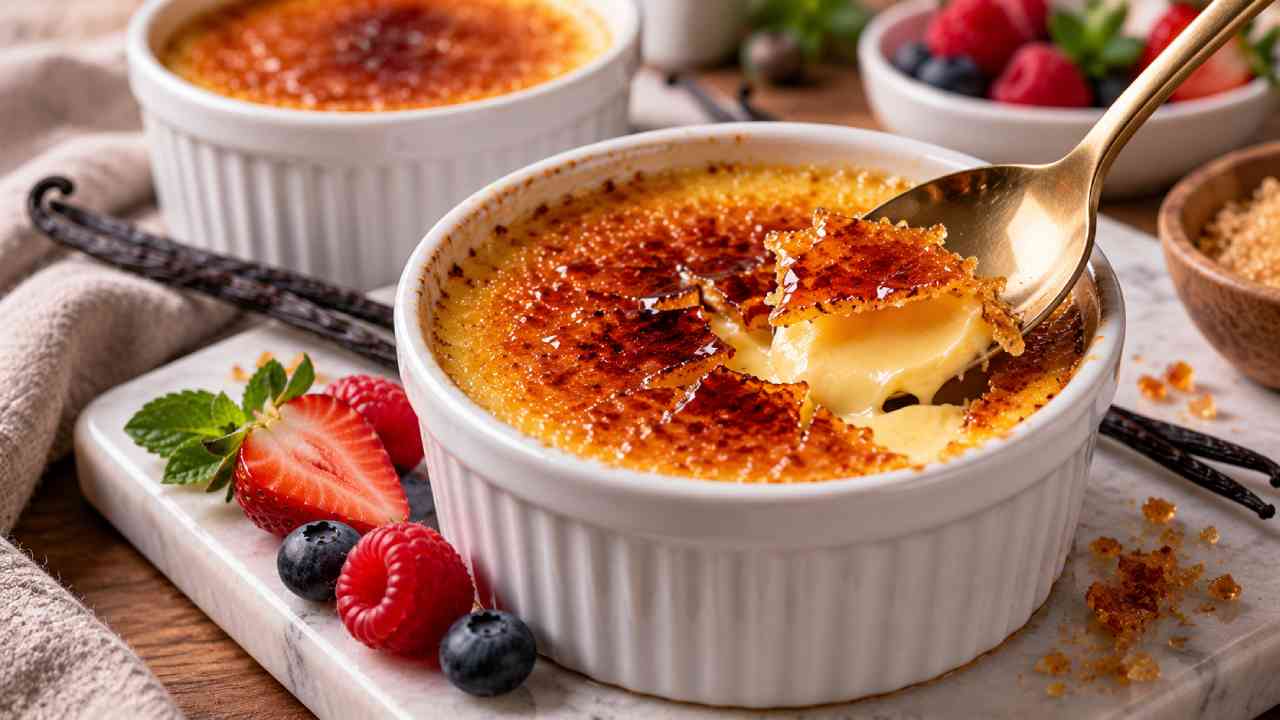
TastyPlatePedia – Crème Brûlée turns a handful of simple ingredients into an elegant dessert with a memorable contrast. At first glance, its golden caramel surface looks smooth and delicate. Then, a spoon breaks through the thin sugar crust with a satisfying crack. Underneath, a silky vanilla custard waits with a completely different texture. This contrast is the heart of the dessert. The caramel is crisp and slightly bittersweet, while the custard feels cool, creamy, and rich. Moreover, the vanilla adds warmth without overwhelming the other flavors. The dessert may look sophisticated, yet its appeal comes from simplicity. Each element has a clear purpose. In my view, that balance explains why this classic continues to feel special. It does not need elaborate decoration or layers of frosting. Instead, careful technique transforms cream, eggs, sugar, and vanilla into a dessert that feels refined from the first crack to the final spoonful.
Read Also: Organic Mushroom Risotto Turns Simple Ingredients Into an Elegant Dish
The Signature Caramel Crack Creates an Unforgettable First Bite
Few desserts make eating them part of the experience. Crème Brûlée does exactly that. Before reaching the custard, the spoon must break its caramelized sugar crust. That small moment creates the signature crack associated with the dessert. However, the sugar layer should remain thin. A very thick crust can become difficult to break and may dominate each spoonful. Therefore, an even coating of fine sugar works best. A kitchen torch can quickly melt the crystals and create an amber surface. As the caramel cools, it hardens into a delicate shell. The slight bitterness of caramelized sugar also matters. It balances the sweet vanilla custard underneath. As a result, each spoonful offers both contrast and harmony. Visually, the glossy caramel surface adds another layer of appeal. Yet the real pleasure arrives when that surface breaks and reveals the pale custard hidden below.
Silky Vanilla Custard Is the Heart of This Classic Dessert
The caramel may provide the drama, but the custard defines the quality of Crème Brûlée. A good custard should feel smooth, creamy, and delicate rather than firm or rubbery. Heavy cream creates richness, while egg yolks help the mixture set during baking. Meanwhile, vanilla gives the dessert its familiar aroma. Vanilla bean offers a deeper fragrance and attractive black specks. However, good vanilla extract is also practical for home baking. Temperature control becomes especially important during preparation. If the custard gets too hot, the eggs may curdle. Therefore, warm cream should be introduced gradually to the egg mixture. Gentle baking also helps maintain a smooth texture. When prepared correctly, the center should have a slight wobble when removed from the oven. It becomes firmer as it cools. This careful balance produces the silky consistency that makes each spoonful feel luxurious.
A Water Bath Helps Create a Smooth and Even Texture
One technique makes a significant difference when preparing this dessert: the water bath, also known as a bain-marie. The filled ramekins sit inside a larger baking dish. Hot water is then poured around them before baking. As a result, the custard receives gentler and more even heat. This method reduces the risk of overcooked edges while the center remains underdone. Moreover, the moist environment supports a smoother texture. Direct oven heat can be harsh on egg-based custards. The water bath acts as a buffer and slows the cooking process. However, care is important when handling the hot baking dish. Water should reach roughly halfway up the sides of the ramekins without entering them. After baking, remove the ramekins carefully and let them cool. Although this extra step requires a little patience, it can noticeably improve the final texture.
Ingredients for Classic Crème Brûlée
A classic recipe does not require a long ingredient list. Therefore, ingredient quality becomes especially important. Fresh cream creates the rich base, while egg yolks provide structure. Vanilla adds aroma, and sugar contributes sweetness as well as the crisp topping.
Ingredients:
● 500 ml heavy cream
● 5 large egg yolks
● 80 g granulated sugar
● 1 vanilla bean or 2 teaspoons vanilla extract
● A small pinch of salt
● 4–6 tablespoons fine granulated sugar for caramelizing
● Hot water for the water bath
These quantities make approximately four to six portions, depending on the ramekin size. Wide and shallow ramekins work particularly well. They provide more surface area for the caramel crust while keeping the custard relatively thin. In addition, shallow custard tends to bake more evenly. If using vanilla bean, split the pod and scrape out the seeds. Both the seeds and pod can infuse the cream before the custard is mixed.
How to Make Crème Brûlée Step by Step
The process becomes much easier when each stage is handled carefully. Most importantly, avoid rushing the custard. Gentle mixing and controlled heat help create the smooth consistency associated with this dessert.
Steps:
- Preheat the oven to 150°C or 300°F.
- Place four to six ramekins inside a deep baking dish.
- Heat the heavy cream with vanilla over medium-low heat until steaming. Do not let it boil vigorously.
- Remove the cream from the heat and let the vanilla infuse briefly.
- In another bowl, whisk the egg yolks, sugar, and salt until combined.
- Slowly pour the warm cream into the yolks while whisking gently.
- Strain the mixture through a fine sieve to remove any lumps.
- Divide the custard evenly among the ramekins.
- Pour hot water into the baking dish until it reaches about halfway up the ramekins.
- Bake for about 30–40 minutes. The edges should be set, while the center should still wobble slightly.
- Remove the ramekins from the water and let them cool.
- Refrigerate for at least four hours, or preferably overnight.
- Sprinkle a thin, even layer of sugar over each chilled custard.
- Caramelize the sugar with a kitchen torch until golden and glossy.
- Allow the caramel to harden briefly before serving.
Caramelizing the Sugar Is Where the Magic Happens
The final stage transforms chilled custard into the dessert people recognize immediately. First, make sure the custard surface is dry. Moisture can prevent the sugar from caramelizing evenly. Next, sprinkle a thin layer of sugar across the entire surface. Tilt the ramekin gently to distribute it. Then, use a kitchen torch and keep the flame moving. Holding it in one place for too long may burn one area while leaving another untouched. The sugar will first melt and bubble. After that, it will gradually develop an amber color. Stop before the surface becomes excessively dark. Within a minute or two, the melted sugar cools into a crisp shell. Ideally, caramelize the topping shortly before serving. Otherwise, moisture from the custard can slowly soften the crust. That fresh contrast between cold custard and newly hardened caramel delivers the best experience.
Tips for Smooth Custard and Perfect Caramel
Small details can make a major difference when working with egg-based custard. Fortunately, most common problems are easy to avoid with controlled temperatures and a little patience.
Tips:
- Use room-temperature egg yolks for easier mixing.
- Warm the cream gently instead of bringing it to a hard boil.
- Add warm cream to the yolks gradually to prevent curdling.
- Whisk gently so the mixture does not develop excessive foam.
- Strain the custard before pouring it into the ramekins.
- Use shallow ramekins for more even baking and a larger caramel surface.
- Avoid overbaking. The center should still wobble slightly when finished.
- Chill the custard completely before adding the sugar topping.
- Pat away surface moisture before caramelizing.
- Use a thin and even layer of sugar for a delicate crust.
- Keep the torch moving to avoid creating burnt patches.
- Caramelize shortly before serving to maintain the signature crack.
These simple habits improve both texture and appearance. More importantly, they make the process easier to repeat consistently.
Crème Brûlée and Crème Caramel Are Not the Same Dessert
Crème Brûlée and crème caramel share several ingredients, so they can appear similar at first. However, their textures and presentations are noticeably different. Crème caramel, also known as flan in many places, is usually cooked with caramel at the bottom of its mold. After chilling, it is inverted onto a plate. The melted caramel then becomes a sauce that flows around the custard. Crème Brûlée takes the opposite approach. It remains inside its ramekin and receives caramelized sugar only after the custard has chilled. Therefore, its caramel becomes crisp rather than liquid. The custard can also feel richer because many recipes rely heavily on cream. Both desserts celebrate custard and caramel, yet they offer different experiences. One is soft with flowing caramel sauce. The other creates a striking contrast between a brittle sugar crust and silky cream beneath it.
Read Also: London Chocolate Cake Becomes a Favorite, Salted Caramel Makes It Different
Vanilla Is Classic, but Other Flavors Can Add Personality
Once the classic technique is mastered, the custard provides room for creative variations. For example, espresso can add roasted depth that pairs naturally with caramel. Matcha offers an earthy bitterness and a distinctive green color. Meanwhile, Earl Grey tea brings citrus and floral notes. Chocolate creates an even richer version, while citrus zest can make the custard feel brighter. Pistachio is another interesting option for a nutty flavor. However, additional ingredients should support rather than overpower the custard. The signature experience still depends on the contrast between a smooth base and crisp caramel topping. Therefore, subtle flavoring often works better than adding too many elements. This is also why the vanilla version remains timeless. Its restrained flavor allows the cream, egg custard, and caramelized sugar to complement one another without competition.
An Elegant Dessert That Rewards Patience and Simple Technique
Crème Brûlée shows how technique can transform basic ingredients into something memorable. Cream, eggs, sugar, and vanilla are familiar pantry staples. Yet careful heating, gentle baking, proper chilling, and final caramelization give them a completely different identity. Furthermore, much of the dessert can be prepared in advance. The custards can chill in the refrigerator until they are needed. Then, the sugar crust can be caramelized just before serving. This makes the dessert practical for a dinner party despite its elegant appearance. The most satisfying moment still arrives at the table. A spoon taps the golden surface, the caramel cracks, and the silky custard appears underneath. That contrast explains much of its lasting appeal. Rather than relying on complicated decoration, this classic dessert focuses on texture, temperature, aroma, and balance. When those elements work together, even a small ramekin can deliver a remarkably complete dessert experience.